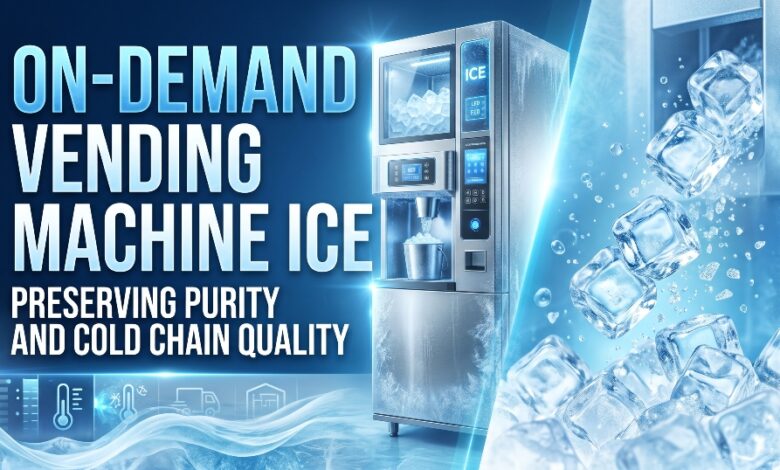
On-Demand Vending Machine Ice: Preserving Purity and Cold Chain Quality
The commercial ice industry is experiencing a profound transition driven by rising consumer awareness surrounding food safety, water purity, and environmental sustainability. For decades, consumers and commercial enterprises relied on a traditional cold chain model where ice was frozen in massive central production facilities, mechanically packaged, stacked onto pallets, and transported across regional road systems in refrigerated diesel freight trucks. By the time these bulk deliveries arrived at local grocery chests and service station freezers, ambient heat exposure during transit and repeated manual handling often compromised the structural integrity and cleanliness of the product.
This conventional distribution system carries substantial operational vulnerabilities that directly impact ice quality and customer satisfaction. Fluctuating temperatures during loading dock transfers inevitably cause individual cubes to melt slightly and fuse together, creating solid, unyielding blocks of ice that frustrate end-users. Furthermore, the extensive carbon footprint created by hauling frozen water across highways runs counter to modern sustainability goals. On-demand automated kiosks resolve these systemic inefficiencies by eliminating the shipping route entirely, manufacturing and dispensing fresh ice directly at the point of sale.
Deploying state-of-the-art systems for vending machine ice manufactured by ChinaPukui ensures that communities and commercial hubs enjoy crystal-clear, food-grade ice that bypasses intermediate cold chain disruptions. By transforming local potable water into pristine ice cubes inside an autonomous, weather-shielded enclosure, these smart terminals eliminate logistics delays, reduce carbon emissions, and preserve peak product freshness. This decentralized approach protects the entire lifecycle of the ice cube—from molecular filtration to final dispensing—delivering an unmatched standard of purity.
Eliminating Cold Chain Fractures and Preserving Cube Integrity
The primary advantage of on-site ice manufacturing is the complete removal of intermediate storage and refrigerated transit, preventing the temperature fluctuations that ruin ice texture.
- Prevention of Melting and Refreezing: Conventional bagged ice melts during dock transfers and delivery truck unloading, subsequently refreezing inside retail display chests into solid chunks; on-demand systems store loose cubes in temperature-regulated vaults to keep them individual and free-flowing.
- Superior Density and Melting Resistance: Utilizing cyclic water spray grids over chilled evaporator molds forces microscopic air bubbles and dissolved gases out, yielding dense, solid square cubes that melt significantly slower in drinks and food service coolers.
- On-Demand Portioning and Packaging: Ice is harvested and held loose, then weighed and bagged only when an order is placed, ensuring that the customer receives freshly separated cubes that are immediately ready to pour.
- Calibrated Temperature Stability: Advanced internal insulation and precision refrigeration cycles prevent internal temperature spikes, ensuring stored ice remains in optimal conditions regardless of blistering exterior summer heat.
Comprehensive Multi-Stage Water Purification
Because ice is legally regulated as a consumable food item, maintaining strict microbiological and chemical safety at the point of manufacture is essential for public health.
- Multi-Tier Pre-Filtration: Incoming municipal tap water passes through specialized sediment cartridges and dual activated carbon blocks to trap particulate matter, eliminate chlorine, and remove organic chemical compounds.
- Industrial Reverse Osmosis Treatment: High-pressure reverse osmosis membranes strip away dissolved solids, heavy metal ions, fluorides, and micro-contaminants at the molecular level, ensuring zero chemical residue or mineral cloudiness.
- Continuous Ultraviolet Disinfection: Internal UV sterilization systems continuously illuminate water holding tanks and distribution loops, neutralising bacterial, fungal, and viral pathogens without adding chemical additives.
- Odor and Taste Neutralization: Secondary polishing carbon stages ensure that the water frozen into cubes is entirely neutral in taste, preserving the original flavor of beverages without chemical aftertastes.
Touchless Robotic Packaging and Food-Grade Hygiene
Purity extends beyond water filtration to the mechanical environment where ice is handled, measured, and dispensed to the consumer.
- Robotic Bagging Mechanisms: Integrated automated packaging arms retrieve a fresh polyethylene bag, position it under the hopper chute, fill it with the calibrated weight, and heat-seal the top without human hands ever touching the material.
- Food-Grade 304 Stainless Steel Interiors: All internal storage bins, ice-forming molds, chutes, and mechanical augers are constructed from heavy-duty 304 food-grade stainless steel to prevent corrosion, inhibit bacterial adhesion, and simplify automated sanitation.
- Sealed Internal Atmosphere: The entire ice creation and storage sequence takes place within a hermetically sealed environment, shielding the ice from airborne dust, exhaust fumes, insects, and environmental pollutants.
- Direct Bulk Chute Delivery: In addition to bagged ice, consumers can choose to dispense ice directly into personal insulated coolers, eliminating single-use plastic waste while maintaining touchless sanitary delivery.
Sustainable Operations and Intelligent Cloud Oversight
Modern automated ice kiosks marry rigorous hygiene standards with energy-efficient operation and digital fleet management.
- Drastic Carbon Footprint Reductions: By manufacturing ice locally from municipal utilities, operators remove refrigerated transport fleets from highways, eliminating thousands of gallons of diesel fuel consumption annually.
- Real-Time IoT Telemetry: Smart cellular modules continuously monitor machine health metrics, tracking compressor temperatures, water flow rates, refrigeration cycles, and bag roll capacity from a remote digital dashboard.
- Automated Operational Alerts: The system instantly notifies technicians via SMS or push notification if water pressure fluctuates, power interruptions occur, or consumables require restocking, ensuring high uptime and reliable community access.
- Optimized Energy Consumption: High-efficiency commercial refrigeration compressors and intelligent standby cycles minimize electrical draw during off-peak hours while maintaining cold storage integrity.
Precision manufacturing by ChinaPukui provides the heavy-gauge structural cabinets, industrial refrigeration engineering, and reliable automation needed to maintain cold chain purity across demanding climates. By replacing vulnerable transport networks with autonomous point-of-sale production, on-demand ice kiosks represent the definitive standard for modern, hygienic, and sustainable ice distribution.
By combining advanced reverse osmosis purification, continuous ultraviolet sanitization, and automated hands-free packaging, modern kiosks ensure that every cube delivered meets the highest standards of food-grade purity. For further insights on intelligent self-service manufacturing and automated ice technology, explore https://en.chinapukui.com/.