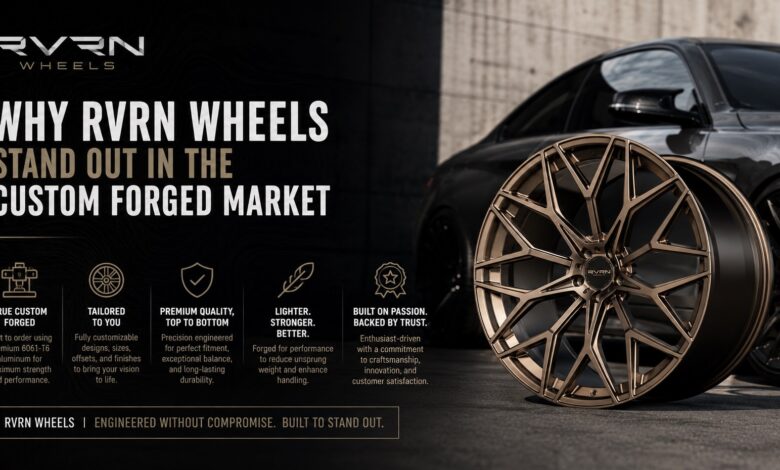
Why RVRN Wheels Stand Out in the Custom Forged Market
Custom forged wheels have become more than just an automotive upgrade. They represent personality, craftsmanship, and the pursuit of performance that goes beyond factory standards. Drivers today are searching for wheels that not only improve the appearance of their vehicles but also elevate handling, durability, and overall driving confidence. In a market filled with countless styles and manufacturing approaches, finding a wheel that truly balances engineering and visual appeal can feel overwhelming. That is why enthusiasts continue paying closer attention to forged wheel technology and the innovation shaping this fast-growing segment.
Modern drivers are no longer satisfied with ordinary wheel designs that blend into traffic. They want precision-built products that match the individuality of their vehicles while offering long-term reliability on both streets and highways. Forged wheels have earned their place because of their strength-to-weight ratio, premium construction process, and ability to support aggressive fitments without sacrificing safety. As more automotive enthusiasts invest in vehicle customization, the demand for high-quality forged wheels continues to rise across luxury, sports, off-road, and performance communities.
RVRN Wheels has gained attention in the forged wheel scene by delivering premium craftsmanship with a modern approach to customization and performance styling. Drivers searching for refined finishes, advanced engineering, and bold wheel aesthetics often appreciate how the brand focuses on both functionality and visual impact. Instead of following repetitive trends, the company emphasizes unique wheel profiles, detailed machining, and strong structural integrity that align with the expectations of today’s performance-oriented vehicle owners.
The Growing Popularity of Custom Forged Wheels
The automotive customization industry has evolved dramatically over the past decade. What once focused mostly on cosmetic modifications has shifted toward upgrades that blend aesthetics with measurable performance improvements. Forged wheels sit at the center of this movement because they offer advantages that cast wheels often struggle to match. Their lightweight construction can improve acceleration, braking response, and steering feel while maintaining impressive durability under demanding conditions.
One reason forged wheels continue gaining popularity is their manufacturing process. Unlike cast wheels, which are made by pouring molten metal into molds, forged wheels begin as a solid block of aluminum compressed under immense pressure. This process creates a denser and stronger wheel structure. Drivers who prioritize performance often appreciate how forged wheels reduce unsprung weight, helping suspension systems react more efficiently to road conditions.
Another factor fueling demand is personalization. Vehicle owners today want wheels tailored to their exact preferences, including fitment, finish, spoke design, lip depth, and concavity. Custom forged wheels allow far more flexibility than mass-produced options. Enthusiasts can create a setup that perfectly complements their car’s stance and driving style without compromising structural quality.
The luxury and sports vehicle market has also influenced the rise of forged wheels. Premium automotive owners frequently seek upgrades that maintain the sophistication of their vehicles while adding exclusivity. Forged wheels provide that balance because they often feature precision machining, clean detailing, and premium finishes that elevate the overall appearance of a vehicle without looking excessive.
Precision Engineering Creates a Strong Foundation
One of the defining qualities of standout forged wheels is engineering precision. Every detail matters, from load ratings to spoke geometry and weight distribution. Poorly designed wheels may look appealing initially, but long-term durability and driving stability depend heavily on how well the wheel is engineered from the start.
High-quality forged wheels are designed with structural integrity in mind. Engineers carefully calculate stress points and optimize material placement to ensure the wheel can withstand daily driving, high-speed conditions, and uneven road surfaces. This approach results in a wheel that feels responsive while maintaining excellent strength under pressure.
Advanced machining technology also plays a major role in wheel quality. Computer-guided milling equipment allows manufacturers to create highly detailed wheel designs while preserving precise tolerances. This level of consistency improves balance, fitment accuracy, and overall refinement. Drivers often notice smoother handling and better road feedback when wheels are engineered with this degree of precision.
Weight reduction is another critical engineering advantage. Reducing rotational mass can positively affect acceleration, fuel efficiency, and braking performance. Lightweight forged wheels help vehicles feel more agile, especially during cornering or spirited driving. The difference may not always be dramatic during casual commuting, but enthusiasts who value performance quickly recognize the benefits.
Attention to detail often separates ordinary forged wheels from truly premium options. Carefully machined edges, balanced spoke patterns, and reinforced mounting areas contribute to long-term reliability. Drivers who invest in custom forged wheels are not only paying for appearance but also for engineering confidence that supports daily use and high-performance applications alike.
Design Flexibility Helps Vehicles Stand Out
Visual individuality remains one of the biggest reasons drivers choose custom forged wheels. Vehicle owners spend countless hours refining the look of their cars, trucks, and SUVs, and wheels often become the centerpiece of that transformation. The right wheel design can dramatically change the personality of a vehicle, turning a subtle build into something unforgettable.
Forged wheel customization allows drivers to select from a wide range of spoke layouts, finish options, and construction styles. Deep concave profiles, directional patterns, multi-piece aesthetics, and brushed metallic finishes all contribute to creating a distinct appearance. Enthusiasts appreciate having the freedom to personalize their setup instead of settling for generic factory designs.
Color options also continue expanding within the forged wheel industry. Matte finishes, gloss coatings, satin textures, and custom color combinations allow drivers to coordinate wheels with paintwork, brake calipers, or interior accents. This level of customization creates a cohesive and intentional visual style that reflects the owner’s taste.
Fitment customization is equally important. Proper wheel sizing affects not only appearance but also driving dynamics and clearance. Enthusiasts often seek flush fitments or aggressive stances that require carefully calculated offsets and widths. Custom forged wheels provide the flexibility needed to achieve these goals while maintaining functionality and drivability.
Modern wheel trends have shifted toward cleaner and more refined aesthetics rather than overly complex patterns. Minimalist spoke arrangements combined with strong concavity often create a sophisticated appearance that complements both luxury and performance vehicles. Drivers increasingly value designs that remain timeless instead of following short-lived styling trends.
Durability Matters for Everyday Driving
While appearance attracts attention, durability determines long-term satisfaction. Many drivers use their vehicles daily, meaning wheels must withstand potholes, changing weather conditions, highway speeds, and occasional rough surfaces. Forged wheels are often preferred because they offer superior structural strength compared to many alternative manufacturing methods.
The forging process compresses aluminum at extremely high pressure, aligning the material’s grain structure and eliminating weak points commonly found in cast wheels. This results in a wheel that can better resist cracking and deformation under stress. For drivers who encounter unpredictable road conditions, that added resilience becomes especially valuable.
Corrosion resistance also contributes to wheel longevity. Premium forged wheels often receive advanced protective coatings that help preserve finishes against moisture, road salt, and environmental exposure. A properly maintained forged wheel can retain its appearance for years without excessive fading or deterioration.
Heat management is another important advantage. Wheels experience significant heat transfer from braking systems, especially during spirited driving or performance use. Forged wheels typically dissipate heat more effectively due to their material density and design characteristics. Better heat management can contribute to overall braking consistency and wheel longevity over time.
Strength does not have to come at the expense of comfort. Well-designed forged wheels maintain excellent structural integrity while supporting balanced ride quality. Drivers who prioritize both performance and daily usability often appreciate this combination because it allows them to enjoy enhanced driving dynamics without sacrificing practicality.
Innovation Continues to Shape the Forged Wheel Industry
The forged wheel market continues evolving through advancements in manufacturing technology and design philosophy. Modern production techniques allow for greater precision, lighter constructions, and more intricate wheel patterns than ever before. These innovations benefit drivers by expanding customization possibilities while improving overall wheel performance.
Computer-aided engineering has transformed the way wheels are developed. Designers can simulate stress distribution, optimize spoke thickness, and test structural performance digitally before production even begins. This approach leads to stronger and lighter wheel designs that maximize both aesthetics and functionality.
Machining capabilities have also improved significantly. Multi-axis CNC systems allow manufacturers to create detailed cuts and refined surfaces with exceptional consistency. These advanced processes contribute to cleaner finishes, sharper design lines, and more sophisticated wheel profiles that stand out visually without appearing overdesigned.
Customization technology now gives enthusiasts access to highly personalized wheel configurations. Drivers can choose dimensions, finishes, hardware styles, and face profiles tailored specifically to their vehicles. This level of personalization creates stronger emotional connections between owners and their builds because every detail feels intentional and unique.
As automotive trends continue shifting toward electrification and advanced performance platforms, wheel manufacturers must adapt accordingly. Lightweight forged wheels are becoming increasingly important because reducing rotational mass can help support efficiency and handling characteristics in both traditional and electric vehicles. Innovation within the forged wheel space will likely remain a major focus as vehicle technology evolves further.
Why Enthusiasts Value Quality Over Trends
Automotive trends come and go quickly, but quality craftsmanship remains timeless. Enthusiasts who invest in forged wheels often prioritize long-term satisfaction over temporary styling hype. They want products that maintain their appeal and performance years after installation rather than wheels that lose relevance after a single season.
One reason quality matters is resale value. Well-crafted forged wheels tend to retain desirability because of their reputation for durability and precision engineering. Buyers recognize the difference between premium wheel construction and mass-produced alternatives, making quality wheels a worthwhile investment for many vehicle owners.
Consistency also plays an important role. Premium forged wheels are typically manufactured with stricter quality control processes that ensure proper balance, fitment accuracy, and finish consistency. This attention to detail reduces the likelihood of vibration issues, uneven wear, or installation complications.
Enthusiasts also value authenticity. In a crowded market filled with copied styles and low-cost replicas, original wheel designs backed by genuine engineering stand apart. Drivers appreciate products developed with purpose instead of shortcuts. That authenticity often creates stronger brand loyalty and greater confidence in long-term performance.
The emotional connection between drivers and their vehicles cannot be ignored either. Custom forged wheels represent more than a visual upgrade. They symbolize individuality, dedication, and pride in ownership. Whether parked at a car meet or cruising on the highway, a thoughtfully chosen wheel setup reflects the personality and vision behind the entire build.
Drivers interested in exploring premium forged wheel options can learn more at https://rvrnwheel.com/.