Stainless Steel Pipe Fittings: A Guide to Types, Standards, and Piping Applications
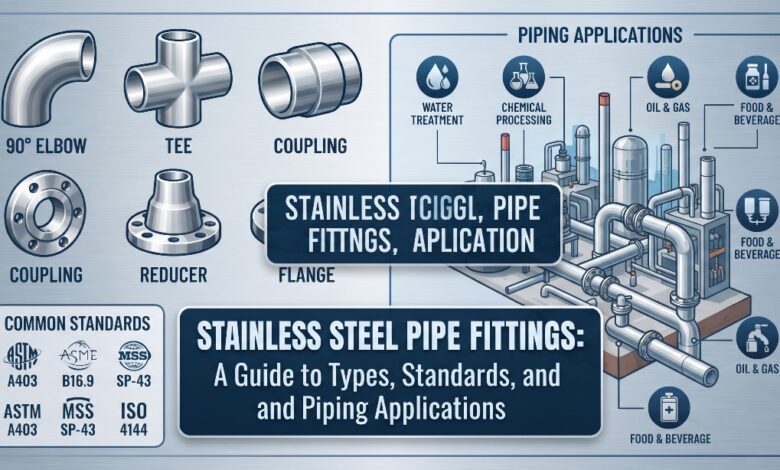
Stainless steel pipe fittings play an essential role in modern piping systems, providing reliable connections, efficient fluid movement, and long-term performance across a wide range of industrial and commercial applications. From water distribution networks and chemical processing facilities to food production plants and construction projects, these components help create piping systems that meet demanding operational requirements. Their corrosion resistance, mechanical strength, and versatility make them a practical choice for projects where durability and consistent performance matter. Understanding the available fitting types, applicable standards, and common piping applications can help engineers, contractors, and procurement professionals make informed decisions when selecting components for their projects.
Understanding Stainless Steel Pipe Fittings
Stainless steel pipe fittings are components used to connect pipes, change flow direction, adjust pipe diameters, branch pipelines, or close the ends of piping systems. They help transform individual pipe sections into a coordinated network capable of transporting liquids, gases, steam, and other compatible materials. Depending on the design and installation requirements, fittings may be welded, threaded, socket-welded, or connected through other approved joining methods. Selecting the appropriate fitting requires consideration of operating pressure, temperature, fluid characteristics, installation conditions, and the mechanical requirements of the complete piping system.
One of the main advantages of stainless steel is its ability to resist corrosion under many operating conditions. Chromium in the alloy forms a thin, protective oxide layer that helps prevent the underlying metal from deteriorating. Different stainless steel grades offer varying levels of resistance to moisture, chemicals, chlorides, and elevated temperatures, making material selection particularly important for specialized applications. When properly specified and installed, stainless steel fittings can support dependable service, reduce maintenance requirements, and contribute to the long-term efficiency of industrial infrastructure.
Why Stainless Steel Is a Preferred Material
Stainless steel offers a combination of properties that makes it suitable for demanding piping environments. Its strength supports reliable connections, while its resistance to rust and many corrosive substances helps protect system integrity over time. The material also provides a smooth surface that can be beneficial in applications where cleanliness, drainage, and contamination control are important. These characteristics make stainless steel fittings valuable in industries that require dependable fluid handling and consistent operating conditions.
Another advantage is the material’s versatility. Stainless steel fittings are available in different shapes, sizes, wall thicknesses, and manufacturing configurations, allowing them to accommodate a wide variety of system designs. Austenitic grades such as 304 and 316 are widely used, although the best choice depends on the service environment. Grade 316 contains molybdenum, which generally improves resistance to chloride-related corrosion compared with grade 304. By matching the material grade to the application, project teams can balance durability, performance, and lifecycle costs.
Common Types of Stainless Steel Pipe Fittings
Understanding fitting designs is an important step in developing an efficient piping layout. Each fitting serves a particular purpose, and the right selection can improve flow characteristics, simplify installation, and support easier maintenance. Although many designs are available, several types are commonly used in industrial, commercial, and infrastructure projects.
- Elbows: These fittings change the direction of flow, commonly by 45 or 90 degrees. Long-radius elbows can help reduce flow resistance in suitable applications, while short-radius designs may be useful where installation space is limited.
- Tees: Tee fittings create a branch connection, allowing fluid to move between a main pipeline and a secondary line. Equal tees have matching branch and main-run diameters, while reducing tees accommodate different sizes.
- Reducers: These fittings connect pipes of different diameters. Concentric reducers maintain a common centerline, whereas eccentric reducers have offset centerlines and may help address drainage or air-pocket concerns in particular layouts.
- Couplings: Couplings join compatible pipe sections and are available in different configurations depending on the connection method and system requirements.
- Caps and plugs: These components close pipe ends, helping isolate unused connections or terminate sections of a piping network.
- Unions: Where appropriate, unions allow connected pipe sections to be disconnected more conveniently for inspection, servicing, or replacement.
- Flanges: Flanged connections use bolting and suitable gaskets to join pipes, valves, pumps, or other equipment, making them useful where access for maintenance is important.
The correct choice depends on the pipeline’s design pressure, operating temperature, dimensional requirements, and connection method. Careful coordination between fittings and pipes is essential for creating a secure, functional, and maintainable system.
Stainless Steel Pipe Fitting Standards and Specifications
Industry standards help establish consistent requirements for fitting dimensions, manufacturing processes, material properties, tolerances, and testing. Following the appropriate specification helps ensure that individual components are compatible with the intended piping system. However, no single standard applies to every stainless steel fitting, so engineers should identify the relevant requirements before purchasing materials.
Common specifications include ASTM A403 for wrought austenitic stainless steel piping fittings, ASME B16.9 for factory-made wrought buttwelding fittings, and ASME B16.11 for forged fittings used in socket-welding and threaded connections. ASME B16.5 addresses pipe flanges and flanged fittings within its specified scope. These standards cover different component categories, so their applicability depends on the fitting design and connection type.
Material grade is another important consideration. A specification may define acceptable chemical composition, mechanical properties, heat treatment, and inspection requirements. Buyers should also verify nominal pipe size, schedule or wall thickness where applicable, pressure-temperature ratings, end preparation, and required documentation. When a project operates under a particular piping code, all components must meet the applicable code and project requirements rather than relying on a product description alone.
Key Considerations When Selecting Pipe Fittings
Choosing stainless steel fittings requires more than matching the connection size. A component that performs well in one environment may be unsuitable in another because of differences in temperature, pressure, fluid chemistry, or mechanical loading. Evaluating the complete operating environment helps reduce premature failures and supports long-term reliability.
Important selection factors include:
- Material grade: Consider the fluid composition, chloride exposure, temperature, and potential corrosion mechanisms before choosing a grade.
- Operating pressure: Confirm that the fitting’s design and rating are appropriate for the maximum expected system pressure and relevant temperature conditions.
- Dimensions and compatibility: Verify nominal size, wall thickness, end connections, and dimensional standards to ensure proper alignment with adjoining components.
- Manufacturing quality: Review applicable material certifications, inspection records, traceability requirements, and testing documentation.
- Installation conditions: Consider available space, access for welding or assembly, expected vibration, thermal expansion, and future maintenance needs.
- Lifecycle requirements: Assess durability, replacement accessibility, cleaning requirements, and the overall cost of ownership rather than focusing exclusively on the initial purchase price.
These considerations are particularly important for complex installations where numerous fittings must work together under consistent operating conditions. Clear specifications and proper quality checks help procurement teams avoid incompatible components and unnecessary project delays.
Industrial Applications of Stainless Steel Pipe Fittings
Stainless steel fittings are used across numerous sectors because they can support different fluid-handling requirements while offering strength and corrosion resistance. Their suitability depends on the selected alloy, fitting design, manufacturing quality, and the conditions in which the system operates.
In the chemical and petrochemical industries, stainless steel fittings may be used in pipelines carrying compatible chemicals, process fluids, and other industrial materials. Engineers must assess the chemical composition, concentration, temperature, and potential corrosion mechanisms before selecting the alloy. In water treatment and distribution systems, suitable stainless steel components can provide durable connections in applications involving clean water, process water, and certain treatment chemicals.
The food and beverage industry uses stainless steel piping in applications where hygiene and cleanability are important. Properly specified fittings, suitable surface finishes, and hygienic connection designs can help support sanitation procedures and reduce locations where unwanted material might accumulate. Pharmaceutical and biotechnology facilities may also require specialized materials, surface finishes, fabrication practices, and validation procedures to meet strict cleanliness requirements.
In construction and infrastructure, stainless steel fittings can be used in mechanical services, building utilities, industrial facilities, and specialized water systems. Power generation facilities may use stainless steel components in selected auxiliary or process lines, depending on operating conditions. Marine environments present additional challenges because salt exposure can accelerate corrosion, making alloy selection, inspection, and maintenance especially important.
Across these applications, the central principle remains the same: fitting performance depends on matching the material and design to the actual service conditions rather than assuming every stainless steel product is suitable for every environment.
The Importance of Manufacturing Quality and Reliable Supply
Consistent manufacturing quality is fundamental to the performance of stainless steel piping components. Accurate dimensions, appropriate material composition, sound weld preparation, and controlled production processes help fittings integrate correctly with the rest of a piping system. Manufacturing defects or incorrect specifications can create installation difficulties, leakage risks, and unexpected maintenance requirements, particularly in high-pressure or corrosive environments.
Hunan Tubular Steel Industry Co Ltd is associated with the stainless steel and tubular steel sector, where material selection, product specifications, and dependable supply are important considerations for industrial buyers. When evaluating a potential supplier, purchasers should focus on whether the available products match the project’s technical requirements and whether supporting documentation is provided where necessary. Material certificates, dimensional inspection reports, traceability records, and applicable conformity documents can help procurement teams assess product suitability.
A reliable purchasing process also considers communication, production scheduling, packaging, and delivery coordination. Clear technical documentation reduces misunderstandings between engineers, contractors, and suppliers, while appropriate packaging helps protect fittings from damage and contamination during transportation. For large projects, consistent specifications across different deliveries can simplify inspection, installation, and inventory management.
Rather than treating fittings as minor accessories, project teams should recognize them as critical components that influence the safety, efficiency, and maintainability of the entire pipeline. Investing time in supplier evaluation and specification review can help prevent costly errors later in the project.
Installation, Inspection, and Maintenance Best Practices
Correct installation is essential for achieving the expected performance of stainless steel pipe fittings. Before assembly, technicians should check dimensions, material identification, end preparation, and the condition of sealing surfaces. Components with visible damage, contamination, or incorrect specifications should be separated for further evaluation instead of being installed automatically. Maintaining clean work areas and using suitable tools can also help prevent contamination and surface damage.
Welded connections require qualified procedures, appropriate filler materials where needed, and suitable control of heat input. Stainless steel can be sensitive to certain fabrication conditions, and poor welding practices may compromise corrosion resistance or mechanical integrity. Threaded and flanged connections also require careful assembly, including compatible sealing materials, correct bolt tightening practices, and appropriate gasket selection. Installation should follow the applicable engineering drawings, piping code, and approved procedures.
Inspection and maintenance should reflect the operating environment and the consequences of a potential failure. Routine checks may include examining joints for leakage, inspecting exposed surfaces for corrosion, reviewing supports for movement, and checking for signs of vibration or mechanical stress. Systems handling hazardous fluids or operating under demanding conditions may require more comprehensive inspection programs.
Preventive maintenance can identify developing problems before they cause significant disruption. Keeping accurate installation records, tracking repairs, and documenting inspection findings also helps maintenance teams understand recurring issues and plan replacements. When stainless steel fittings are selected, installed, and maintained correctly, they can contribute to a more reliable piping system throughout its intended service life.
Future Trends in Stainless Steel Piping Applications
Industrial piping requirements continue to evolve as facilities seek improved efficiency, stronger quality controls, and more sustainable operating practices. Stainless steel remains relevant because it combines useful mechanical properties with corrosion resistance and the potential for long service life in suitable environments. Advances in manufacturing and inspection techniques can improve dimensional consistency, defect detection, and the traceability of critical components.
Digital documentation is also becoming increasingly valuable in complex projects. Better records of material grades, manufacturing batches, inspection results, and installation locations can make it easier to identify components during maintenance or system upgrades. For facilities with extensive piping networks, this information can support more organized asset management and help teams plan maintenance around operational needs.
Sustainability is another important consideration. Stainless steel is recyclable, and durable components may reduce the frequency of replacement when they are correctly selected and maintained. However, the environmental benefits of a particular piping system depend on its manufacturing processes, transportation, operating life, maintenance requirements, and eventual recovery or recycling.
Future purchasing decisions are likely to place continued emphasis on technical compliance, product traceability, and total lifecycle performance. Organizations that consider these factors alongside initial costs can make more informed decisions about their piping infrastructure and prepare their facilities for changing operational requirements.
Conclusion
Stainless steel pipe fittings are essential components that help create dependable piping systems across industrial, commercial, and infrastructure applications. Their range of designs supports changes in direction, branching, diameter transitions, equipment connections, and pipeline termination. Selecting the right components requires careful attention to material grades, operating pressure, temperature, fluid compatibility, dimensional standards, and manufacturing quality.
Understanding specifications such as ASTM A403, ASME B16.9, and ASME B16.11 helps engineers and procurement professionals identify products suited to particular connection types and project requirements. Proper installation, inspection, and maintenance are equally important because even high-quality fittings can underperform when they are incorrectly selected or assembled. By prioritizing technical compatibility, reliable documentation, and lifecycle performance, project teams can build piping systems designed for durability, efficiency, and dependable operation.
For additional information about Hunan Tubular Steel Industry Co Ltd, visit the company’s About Us page.