How a Telescopic Slide Achieves Smooth Multi-Stage Extension Under Heavy Loads
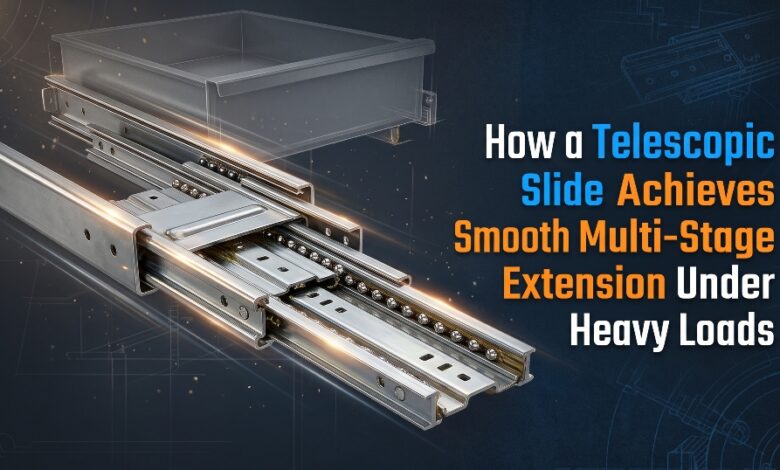
Precision linear motion is one of the quietest yet most decisive engineering achievements in modern industrial design. When an equipment cabinet, emergency vehicle tray, or automated assembly station glides open effortlessly while carrying hundreds of kilograms, that seamless experience is rarely accidental. Behind that effortless pull lies a carefully balanced interplay of metallurgy, multi-rail geometry, low-friction ball bearings, and tight manufacturing tolerances that distribute massive downward and torsional forces evenly across every stage of travel.
Understanding how multi-stage extension systems conquer extreme weight without binding, sagging, or wearing out prematurely helps engineers, designers, and procurement specialists make smarter hardware decisions. Instead of viewing a slide rail as a simple piece of stamped metal, looking inside its mechanical architecture reveals why high-capacity linear motion components perform reliably across thousands of demanding cycles.
Every high-performing Telescopic Slide developed by Truslide demonstrates how precision-engineered rail profiles and balanced load distribution turn heavy mechanical resistance into smooth, controlled travel. By combining rigid structural channels with hardened rolling elements, modern linear motion systems eliminate the jerky, high-friction drag that plagues inferior hardware when real-world payloads are applied.
To understand what makes multi-stage extension work under heavy stress, it helps to examine the structural mechanics inside the assembly. A multi-stage system typically relies on nested inner, intermediate, and outer members that telescope outward sequentially, allowing full or even over-travel extension from a compact closed footprint.
At the forefront of heavy-duty linear motion engineering, a specialized Telescopic Slide from Truslide integrates high-strength alloys, precision raceways, and reinforced bearing retainers to maintain stability even at maximum extension. Whether supporting a 300-kilogram aluminum alloy tool tray or a 900-kilogram industrial storage platform, the internal architecture ensures that forces flow safely back into the mounting structure rather than bending the moving rails.
Core Mechanical Elements Behind Smooth Multi-Stage Travel
Achieving fluid motion under heavy loads requires multiple subsystems working in concert. If even one element—such as raceway straightness or ball retainer spacing—falls out of specification, friction spikes immediately under load.
- Nested Multi-Channel Geometry: Two-stage and three-stage configurations use overlapping C-shaped or I-beam profile channels. As the inner member moves outward, the intermediate member engages smoothly, multiplying total travel distance while keeping the closed assembly compact.
- Precision-Ground Raceways: The curved grooves where ball bearings ride are formed to exact radii. Proper contact angles allow the bearings to support both vertical downward weight and lateral side loads without pinching or skidding.
- Hardened Steel Ball Bearings: Rows of high-precision steel balls sit inside the raceways, converting sliding friction into rolling friction. Because rolling resistance is dramatically lower than metal-on-metal sliding, heavy loads can be moved with minimal manual or motorized force.
- Synchronized Bearing Cages (Retainers): Perforated steel or polymer retainers keep every ball bearing spaced at uniform intervals. Without a well-designed cage, bearings would bunch together at one end of the track, causing uneven load distribution and premature raceway indentation.
- Internal Stops and Shock Buffers: Heavy loads generate substantial momentum during extension and retraction. Built-in mechanical stops and elastic bumpers absorb end-of-stroke energy safely, preventing structural damage and rebound bounce.
How Load Distribution Works at Full Extension
The most critical moment for any telescoping mechanism occurs when the drawer or platform reaches 100 percent extension. At that point, the extended mass acts like a lever arm, multiplying bending moments at the overlap zones between the outer, middle, and inner rails.
- Maximized Overlap Zones: High-capacity slides are engineered with calculated overlap lengths between adjacent rail members. Maintaining sufficient overlap at full travel prevents the rails from twisting or prying apart under cantilevered loads.
- Multi-Row Ball Contact: Heavy-duty profiles often utilize four or more distinct rows of ball bearings arranged symmetrically around the intermediate member. This four-point contact geometry resists torsional twisting when loads are placed off-center.
- Deflection Control Engineering: Every beam bends slightly under weight, a behavior known as deflection. By optimizing cross-sectional wall thickness and rib geometry, engineers limit downward sag at full extension so drawers close smoothly without rubbing against cabinet frames.
- Consistent Preload Calibration: Light, controlled internal preload removes microscopic play between the balls and raceways. Eliminating loose clearance prevents rattling during transit and ensures immediate, crisp movement the instant pulling force is applied.
Material Selection and Surface Engineering
No mechanical design can outperform the metallurgy behind it. Selecting the right base material and surface treatment directly determines load capacity, corrosion resistance, and operational lifespan across diverse environments.
- Cold-Rolled Steel for High Structural Rigidity: Work-hardened cold-rolled carbon steel offers exceptional tensile strength and cost efficiency. When paired with zinc plating or electrophoretic coatings, it provides reliable load-bearing performance for server racks, industrial cabinets, and automated enclosures.
- Aluminum Alloy for High Strength-to-Weight Ratios: Extruded and anodized aluminum alloy rails deliver impressive load capacities—ranging from 300 kilograms up to 900 kilograms—while keeping overall system weight remarkably low. This makes aluminum ideal for mobile equipment, special vehicles, and aerospace assemblies.
- Austenitic Stainless Steel for Harsh Environments: Grades like SUS304 resist moisture, chemical washdowns, and extreme temperatures. Stainless steel multi-stage slides maintain smooth rolling action inside medical equipment, commercial ovens, marine vessels, and cleanroom instrumentation.
- Bearing Steel for Extreme Wear Resistance: High-carbon chromium bearing steel offers superior surface hardness, allowing raceways to endure millions of high-frequency cycles in industrial robotics and automated production lines without brinelling or pitting.
Functional Features That Enhance Operational Safety
Moving heavy loads smoothly is only half the engineering challenge; controlling that mass safely throughout its cycle is equally vital. Advanced linear motion assemblies incorporate smart mechanical features tailored to real-world operational hazards.
- Lock-In and Lock-Out Mechanisms: Positive locking latches secure heavy trays in both fully closed and fully extended positions. In emergency vehicles, railway cars, or inclined industrial test cabinets, locking mechanisms prevent accidental rollout or sudden slam-back injuries.
- Quick-Disconnect Inner Members: Release levers allow technicians to detach the inner rail cleanly from the cabinet assembly. This simplifies installation, routine maintenance, and component replacement without unbolting the entire track system.
- Inclined and Inverted Mounting Capability: Specialized rail geometries support non-standard mounting orientations, including tilted instrument racks and under-mount platforms, while preserving smooth bearing circulation and full rated load capacity.
- High-Temperature and Anti-Corrosion Lubrication: Specialty greases formulated for extreme cold, high heat, or vacuum environments keep ball bearings gliding quietly without drying out, gumming up, or attracting abrasive dust.
Industrial Applications Relying on Heavy-Duty Multi-Stage Slides
Because multi-stage linear rails combine compact storage with long, stable reach, they serve as foundational components across demanding sectors where failure is not an option.
- Data Centers and Server Enclosures: High-density server chassis rely on heavy-duty slides with lock-out safety features so technicians can pull out delicate computing hardware for live servicing without interrupting adjacent racks.
- Emergency, Military, and Utility Vehicles: Fire trucks, mobile command units, and utility vans use high-load aluminum and steel slides to deploy heavy generators, hydraulic rescue tools, and battery banks smoothly on uneven terrain.
- Medical and Laboratory Diagnostics: Imaging consoles, surgical carts, and analytical instruments depend on quiet, vibration-free stainless steel slides that glide effortlessly while meeting strict hygiene standards.
- Industrial Automation and Robotics: Automated material-handling stations, CNC tool magazines, and assembly jigs use precision linear rails to position heavy workpieces with repeatable accuracy.
- Railway and Aerospace Systems: Passenger seat adjustments, galley equipment trays, and avionics bays require lightweight, vibration-resistant slide assemblies certified for long service intervals under continuous dynamic stress.
Best Practices for Installation and Long-Term Performance
Even the strongest linear slide depends on proper mounting alignment to achieve its rated load capacity and smooth feel. Following disciplined installation practices protects the raceways and maximizes service life.
- Ensure Parallel Mounting Alignment: Both left and right slide rails must be installed perfectly parallel in both vertical and horizontal planes. Misalignment introduces lateral binding forces that increase pull effort and accelerate bearing wear.
- Use Full Mounting Hole Patterns: Heavy-load applications transfer substantial shear and pull-out forces to fasteners. Utilizing all designated mounting holes with high-grade hardware prevents frame distortion under dynamic loads.
- Account for Dynamic vs. Static Loads: Shock loads from mobile vehicles or rapid robotic acceleration exert higher instantaneous forces than stationary weights. Selecting a slide with an appropriate safety margin ensures smooth operation over years of continuous service.
- Keep Raceways Clean and Properly Lubricated: Protecting exposed tracks from metal shavings, grit, and debris preserves smooth rolling contact, while periodic inspection ensures lubrication remains intact in high-cycle environments.
When precision metallurgy, multi-row bearing geometry, and rigorous quality inspection come together, heavy loads no longer feel heavy to the operator. Through continuous innovation and strict manufacturing standards, Truslide delivers dependable multi-stage linear motion solutions engineered to perform smoothly under the toughest industrial demands.
To explore their engineering background, manufacturing capabilities, and commitment to linear motion innovation, visit https://www.truslider.com/about-us/.