Engineering Medical-Grade Photobiomodulation with a Trusted Red Light Therapy Device Manufacturer
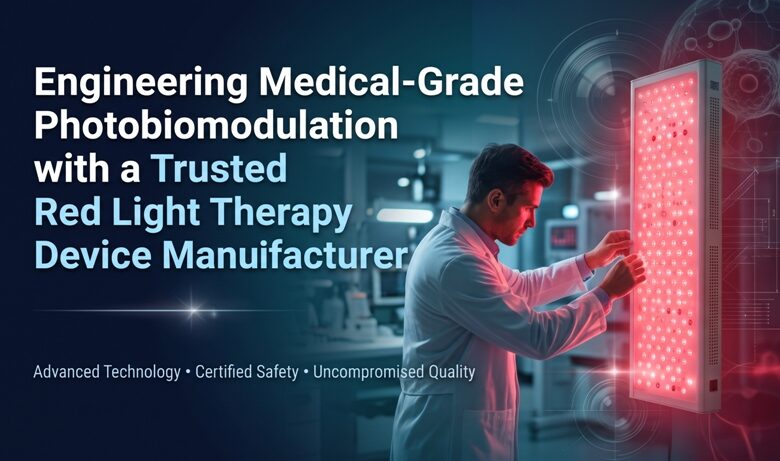
Photobiomodulation has moved far beyond simple cosmetic novelty to become a cornerstone modality in rehabilitation clinics, sports medicine facilities, dermatology practices, and specialized veterinary centers. As clinical practitioners and wellness brands increasingly rely on targeted light wavelengths to stimulate cellular ATP production, modulate inflammation, and accelerate tissue repair, the hardware behind those protocols must meet far higher engineering thresholds than casual consumer gadgets. Medical-grade performance demands tight spectral accuracy, verified irradiance uniformity, ultra-low electromagnetic emissions, and documented quality management systems from component sourcing through final assembly.
Achieving consistent biological outcomes across every treatment session starts with how a device is designed, assembled, and validated at the factory level. Partnering with a specialized red light therapy device manufacturer ensures that rigorous optoelectronic engineering underpins every product line, and Shenzhen HSY LED Technology Co Ltd demonstrates how ISO-certified production, multi-wavelength R&D, and strict testing protocols support global brands and clinical distributors. Backed by over nine years of focused industry experience, a 5,000-square-meter manufacturing facility, and more than 100 distinct models serving over 500 international partners, the company illustrates what goes into engineering dependable photobiomodulation equipment.
Here is a detailed exploration of the technical pillars, regulatory frameworks, and hardware engineering standards required to build medical-grade photobiomodulation devices.
1. Precision Optoelectronics and Biological Wavelength Engineering
In medical-grade photobiomodulation, therapeutic efficacy hinges on delivering photons within narrow optical absorption windows where mitochondrial chromophores—most notably cytochrome c oxidase—respond predictably. Even minor spectral drift can reduce photon absorption and compromise clinical dosing calculations.
- Tightly Binned Multi-Wavelength LED Arrays: Advanced systems combine distinct red and near-infrared (NIR) wavelengths—including 630nm, 660nm, 810nm, 830nm, and 850nm—within balanced optical arrays. Semiconductor diodes are strictly binned upon arrival to hold peak wavelengths within a tight ±5nm tolerance, ensuring repeatable biological signaling across every batch.
- Depth-Specific Tissue Targeting: Visible red wavelengths at 630nm and 660nm target epidermal and dermal layers to support collagen synthesis, skin barrier renewal, and hair follicle vitality. Meanwhile, near-infrared wavelengths at 810nm, 830nm, and 850nm penetrate deeper into subcutaneous tissues, muscles, tendons, and synovial joints to support musculoskeletal comfort and recovery.
- Secondary Optical Lenses for Beam Collimation: Raw semiconductor chips emit light across wide angles that dissipate rapidly with distance. Integrating precision optical lenses (typically 30° to 60° beam angles) over individual diodes focuses photon delivery, minimizing energy scatter and producing uniform irradiance across the entire treatment plane.
- Format-Specific Spectral Calibration: Different clinical and wellness formats require tailored optical configurations. High-wattage rigid panels—such as 300W 5-wavelength systems—are engineered for non-contact full-body or regional protocols, while direct-contact wearables like silicone facial masks, neck wraps, sleeping bags, and pet or equine contour wraps distribute calibrated lower-intensity energy safely against skin or coat.
2. ISO 13485 Quality Management and International Regulatory Compliance
Medical-grade hardware is defined as much by its documented quality governance as by its physical components. Brands distributing across North America, Europe, and global clinical channels must rely on manufacturing partners whose quality systems stand up to regulatory scrutiny.
- ISO 13485 Medical Device Quality Systems: Unlike general consumer electronics standards, ISO 13485 establishes strict requirements for medical device design, component traceability, risk management, and batch consistency. Manufacturing within an ISO 13485 and ISO 9001 framework guarantees that every circuit board, power driver, and enclosure is documented and repeatable.
- Global Safety and Electromagnetic Certifications: Dependable devices are engineered to comply with CE, FCC, FDA, and RoHS standards. These certifications verify electrical insulation safety, restriction of hazardous substances, and electromagnetic compatibility so devices operate safely alongside sensitive clinical instruments without interference.
- Low-EMF Architecture and Flicker-Free Drivers: Medical-grade devices utilize industrial constant-current drivers and shielded internal wiring to keep electromagnetic field (EMF) emissions safely below 3 mG at standard 12-inch operating distances while holding optical flicker under 0.1%, protecting users from visual or neurological fatigue during extended sessions.
3. Thermal Management, PCB Integrity, and Component Longevity
High-output LED arrays generate significant thermal energy at the semiconductor junction. Without disciplined thermal engineering, heat buildup causes wavelength shifting, premature lumen depreciation, and driver failure.
- Aluminum-Core Printed Circuit Boards (PCBs): Automated Surface Mount Technology (SMT) lines mount LEDs onto thermally conductive aluminum-core PCBs rather than standard fiberglass boards. Aluminum substrates draw heat rapidly away from diode junctions, maintaining spectral stability and supporting 50,000+ hours of operational life.
- Active and Passive Heat Dissipation: Rigid clinical and commercial panels combine vented, heavy-duty aluminum housings with quiet, dual ball-bearing cooling fans to maintain thermal equilibrium throughout continuous daily duty cycles.
- Biocompatible Wearable Materials: For skin-contact devices—including LED facial masks, scalp massage combs, skin scrubbers, and flexible joint belts—medical-grade, skin-safe silicones and reinforced, wipe-clean textiles ensure hygiene, flexibility, and comfort across repeated clinical or home use.
4. Multi-Stage Verification: From Spectroradiometers to 100% Aging Runs
Consistent hardware performance requires objective laboratory validation and disciplined factory floor checkpoints rather than reliance on unverified estimates. A dedicated red light therapy device manufacturer bridges the gap between engineering prototypes and mass production through measurable testing protocols.
- Spectroradiometer and Integrating Sphere Validation: Optical power density ($\text{mW/cm}^2$) and spectral distribution curves are verified using calibrated laboratory spectroradiometers and integrating spheres at standardized distances (such as 6 inches and 12 inches). This provides brands and clinicians with accurate irradiance maps for calculating exact radiant energy doses ($\text{J/cm}^2$).
- Incoming and In-Process Quality Control (IQC & IPQC): Raw LED chips, power supplies, and housings pass incoming spectral and electrical tolerance inspections before entering assembly, followed by Automated Optical Inspection (AOI) during SMT soldering to confirm flawless joint integrity.
- Mandatory Continuous Power-On Aging Tests: Prior to final packaging, 100% of assembled panels, handheld devices, wearables, and animal care enclosures undergo continuous 8-to-24-hour burn-in aging runs under full load. Monitoring units during sustained operation catches any early component drift and validates digital timers, dimming levels, remote controls, and pulse frequency modulation.
5. Scalable OEM/ODM Engineering Across Human and Veterinary Markets
As photobiomodulation adoption expands, forward-looking brands seek manufacturing partners capable of translating specialized clinical concepts into cohesive, market-ready product ecosystems. Shenzhen HSY LED Technology Co Ltd supports end-to-end OEM and ODM development across human wellness, aesthetic spa, and veterinary care channels.
- Tailored Optical and Firmware Customization: Engineering teams customize wavelength ratios (630nm through 850nm), pulse frequency presets, dimming curves, and remote or digital controller interfaces to align with proprietary treatment protocols.
- Diverse Form Factors Under One Roof: Brands can build unified product catalogs spanning compact and full-body panels, wearable silicone masks and hats, full-body recovery sleeping bags, and specialized veterinary solutions including pet therapy mats, joint contour wraps, structured metal pet cages, and equine leg wraps.
- Turnkey Branding and Global Export Readiness: From custom housing finishes and laser-engraved branding to localized user manuals, region-specific voltage configurations (100V–240V), and export-grade protective packaging, factory-direct coordination streamlines international launch timelines.
Elevating Standards in Modern Photobiomodulation
Delivering true medical-grade photobiomodulation requires uncompromising attention to spectral precision, thermal engineering, certified quality management, and verified irradiance testing. By working directly with an experienced red light therapy device manufacturer, wellness brands, clinical distributors, and veterinary innovators gain hardware engineered for repeatable biological performance and long-term durability. Partnering with Shenzhen HSY LED Technology Co Ltd provides direct access to certified production lines, transparent optical verification, and comprehensive OEM/ODM engineering tailored to global market demands.
To explore certified photobiomodulation product lines, optical test data, and custom OEM/ODM manufacturing solutions, visit https://www.hsy-lighting.com/.