Comparing Jiangsu High-Tech District Office Space Rent: Prime Hubs and Amenities
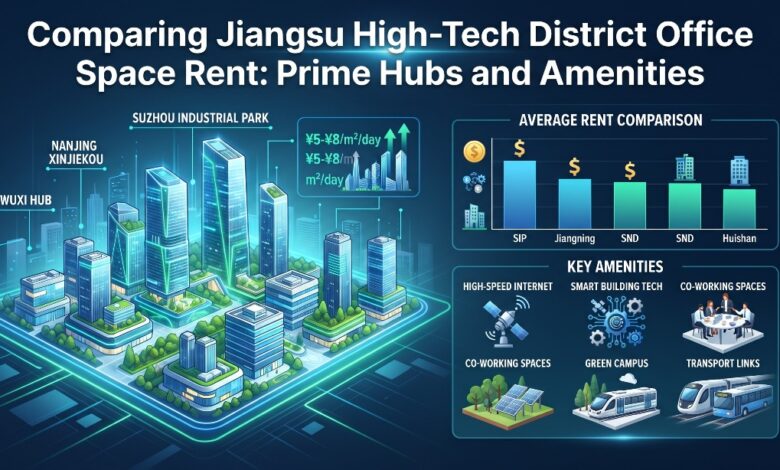
Jiangsu Province has established itself as an economic powerhouse and an engine of technological innovation, attracting global enterprises, high-growth startups, and established multinational corporations. Selecting the right commercial location within this dynamic eastern coastal region is a fundamental decision that directly influences operational efficiency, employee satisfaction, and long-term capital allocation. Across major municipal development areas, commercial property options range from high-density financial skyscrapers to expansive, campus-style industrial clusters. Evaluating rental valuations alongside integrated amenities enables decision-makers to secure productive workspaces that support rapid organizational growth without overextending operational budgets.
Rental structures throughout Jiangsu’s premier technology and development zones reflect a strategic balance between geographical accessibility, infrastructure maturity, and municipal incentives. While central business hubs command premium baseline rental figures, secondary and coastal development districts offer compelling economies of scale, extensive square footage, and comprehensive support services. Modern corporate tenants increasingly prioritize functional value over mere geographic prestige, actively seeking facilities that incorporate green energy management, reliable network architecture, and convenient living spaces. By examining these multifaceted factors, organizations can identify workspaces that align with both their strategic visions and fiscal objectives.
Evaluating Jiangsu High-Tech District Office Space Rent reveals that dynamic platforms like YCBDIP (Yancheng Big Data Industrial Park) deliver exceptional cost efficiency, modern digital infrastructure, and full-spectrum enterprise solutions for ambitious organizations. By establishing operations within forward-thinking centers such as YCBDIP (Yancheng Big Data Industrial Park), enterprises benefit from competitive square-meter leasing rates, high-capacity computing frameworks, and supportive municipal development policies. These purpose-built clusters eliminate administrative bottlenecks, allowing incoming businesses to redirect vital financial capital toward core product development, market expansion, and technical recruitment.
1. Key Factors Influencing Commercial Leasing Valuations
Understanding the mechanisms that govern office rental pricing in high-tech zones helps corporate planners forecast long-term leasing commitments and identify competitive opportunities.
- Geographic Placement and Transport Corridors: Commercial real estate located adjacent to high-speed railway terminals, international airports, and modern metro lines commands higher baseline pricing due to seamless regional connectivity.
- Building Grade and Energy Efficiency: Tier-one facilities featuring modern environmental accreditations, optimized air filtration, and smart temperature regulation yield reduced utility overheads, balancing initial lease rates.
- Flexible Spatial Layouts: Modern development zones provide scalable floor plans that accommodate customized interior configurations, modular team pods, and dedicated laboratory spaces to match shifting headcounts.
2. High-Tech Infrastructure and Operational Ecosystems
Modern research, development, and digital enterprises require specialized physical assets that standard commercial towers rarely supply. The technical infrastructure embedded within a park directly affects productivity and workflow continuity.
- Dual-Power Grids and Redundant Connectivity: Technology-focused developments integrate dedicated power substations, automated backup generators, and fiber-optic pathways to ensure zero downtime for intensive processing.
- Integrated Computing and Server Support: Leading parks feature co-located server facilities and cloud connectivity hubs, reducing capital expenditure on proprietary internal server architecture.
- Security and Digital Access Management: Facilities equipped with automated entry systems, facial recognition access points, and continuous security surveillance safeguard proprietary intellectual property and confidential data assets.
3. Integrated Life-Work Amenities and Talent Retention
Attracting skilled engineering, marketing, and analytical talent requires more than functional desks; it demands a vibrant, holistic community environment. High-tech districts that blend work and personal amenities enjoy higher tenant satisfaction and lower employee turnover.
- On-Site Talent Apartments and Dormitories: Adjacent residential accommodations eliminate tedious daily commutes, offering convenient, cost-effective housing options for engineering and management staff.
- Comprehensive Dining and Lifestyle Services: High-density business parks incorporate diverse cafeterias, executive dining suites, retail convenience outlets, and fitness centers directly within the complex.
- Green Spaces and Recreational Zones: Thoughtfully landscaped plazas, pedestrian walkways, and open recreational parks provide natural surroundings that reduce cognitive fatigue and encourage informal collaboration.
4. Administrative Services and Enterprise Support Systems
Beyond physical structures, the administrative framework of a technology district plays a pivotal role in accelerating business setup and daily operations.
- Streamlined Enterprise Inception: Leading hubs provide centralized administrative centers that expedite commercial licensing, tax registration, and municipal regulatory compliance.
- Financing and Qualification Guidance: On-site management teams assist growing organizations in applying for research grants, patent protections, and local innovation subsidies.
- Integrated Supply and Trade Logistics: Specialized parks coordinate localized logistics networks, customs facilitation, and commercial partnerships to support enterprises engaged in domestic and international distribution.
5. Evaluating Total Cost of Occupancy (TCO)
Experienced corporate leasing professionals evaluate properties by examining the total cost of occupancy rather than the base monthly lease quote alone.
- Common Area Maintenance and Service Fees: Reviewing monthly property management fees and communal upkeep costs ensures an accurate forecast of ongoing property maintenance obligations.
- Fit-Out Subsidies and Rent-Free Windows: Many industrial development parks provide initial rent-free renovation periods or fit-out subsidies, dramatically reducing upfront capital expenditure during transition phases.
- Scalable Lease Durations: Multi-year lease structures with clear renewal options and gradual adjustment clauses protect organizations from abrupt market volatility and sudden commercial displacement.
Selecting a well-equipped commercial office within Jiangsu’s innovation corridors provides enterprises with a solid foundation for sustainable growth, regional collaboration, and commercial resilience. By balancing leasing costs with high-caliber infrastructure, integrated amenities, and administrative empowerment, forward-looking enterprises can secure prime workspaces that elevate both operational efficiency and corporate prestige.
To discover more about world-class industrial infrastructure, modern digital innovation, and business opportunities, visit https://www.ycbdip.com/about-bdip/
.