In-Vacuum Servo Motor: Advanced Precision Motion for Vacuum-Based Equipment
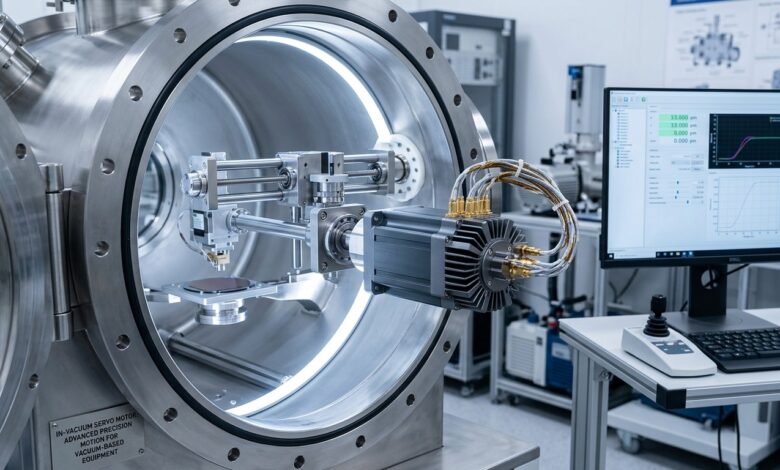
Precision motion becomes much more demanding when machinery has to operate inside a vacuum chamber. Standard motors are usually designed for atmospheric conditions, where surrounding air helps with cooling and where commonly used lubricants, coatings, adhesives, and insulation materials behave predictably. Inside a vacuum environment, those assumptions change quickly. Heat cannot dissipate through normal air convection, certain materials may release gases, lubrication choices become more restrictive, and contamination can interfere with sensitive processes. An In-Vacuum Servo Motor is engineered to address these challenges while delivering accurate, responsive, and repeatable motion. It can be used in sophisticated equipment where positioning quality, cleanliness, and dependable operation are essential, making it especially valuable in advanced manufacturing, scientific systems, inspection platforms, and high-precision automation.
The purpose of an in-vacuum servo system goes far beyond simply making a shaft rotate inside a sealed chamber. These motors are designed around the realities of reduced-pressure operation, where every component may influence performance. Bearings, cables, insulation, connectors, structural materials, winding systems, and lubrication strategies must all work together while minimizing unnecessary contamination. Servo technology adds another important layer by using feedback to monitor actual motor movement and continuously correct deviations from the commanded position or speed. That closed-loop control can help maintain smooth operation even when mechanical loads change during a process. When correctly matched to the application, an in-vacuum motor can provide the combination of precision, compact installation, controlled acceleration, and repeatability needed for increasingly sophisticated vacuum-based equipment.
In-Vacuum Servo Motor solutions from Kingsnitech can support equipment designers who need reliable precision motion within specialized vacuum environments. These applications often demand more than a standard motor with minor modifications because the surrounding environment directly affects thermal behavior, material compatibility, and mechanical reliability. Engineers may need to evaluate vacuum level, continuous and peak torque, speed, feedback requirements, installation space, thermal paths, duty cycle, and contamination sensitivity before choosing the correct motor. The best results usually come from viewing the motor as part of a complete motion-control system rather than an isolated component. By balancing these factors carefully, designers can build equipment that maintains stable performance while reducing unnecessary complexity inside the vacuum chamber.
Why In-Vacuum Motion Requires Specialized Design
Operating directly inside a vacuum removes one of the most familiar methods of motor cooling: convection. In normal air, heat generated by motor windings, bearings, and nearby electronics can be transferred to the surrounding atmosphere. In a vacuum, that mechanism becomes dramatically less effective, leaving conduction through mounting surfaces and thermal radiation as major heat-transfer paths. This means thermal management must be considered from the earliest stages of equipment design. A motor that works comfortably at a certain load in normal atmospheric conditions may experience very different internal temperatures when operating inside a vacuum chamber.
Material behavior is another critical factor. Some materials can release trapped gases or volatile compounds under reduced pressure, a phenomenon commonly known as outgassing. In applications involving sensitive surfaces, optical components, semiconductor-related processes, or precision measurements, unwanted contamination can cause serious problems. For that reason, vacuum-compatible motor construction may require carefully chosen materials, insulation systems, lubricants, and adhesives.
Specialized design therefore helps achieve several important goals at the same time: controlled heat generation, reduced contamination risk, stable mechanical performance, and accurate motion. The servo principle then adds precise control by continuously comparing requested movement with actual movement.
Precision Positioning for Vacuum-Based Equipment
Many vacuum applications require exact positioning rather than simple continuous rotation. A positioning stage may need to move a component by a very small amount, stop accurately, hold its location, and repeat the same movement many times. In other systems, smooth velocity control may be necessary to prevent vibration or disturbance to sensitive workpieces. Servo technology is particularly suitable for these tasks because it relies on feedback rather than open-loop assumptions.
An In-Vacuum Servo Motor can be integrated with a suitable feedback device and controller to maintain close control over position, speed, and torque. When the system detects a difference between the target position and the actual position, it can make immediate corrections. This responsive behavior helps improve repeatability across demanding production or experimental cycles.
Precision motion can be especially useful in vacuum-based equipment involving:
- Positioning stages that move samples or components accurately.
- Inspection systems requiring controlled scanning movement.
- Optical mechanisms that depend on stable alignment.
- Scientific instruments used for sensitive experiments or measurements.
- Coating and deposition equipment where component placement matters.
- Vacuum robotics designed to transfer or manipulate parts in controlled environments.
In each of these cases, predictable motion can support better process consistency and easier automation.
Managing Heat Without Conventional Air Cooling
Thermal control is one of the most important engineering challenges in vacuum motor applications. Because there is little or no surrounding air available to carry heat away, designers need to create effective conductive thermal paths. The motor housing and mounting structure can become part of the cooling strategy, helping move heat into larger mechanical assemblies where it can be managed more effectively.
Motor sizing also influences temperature. Choosing a motor that consistently operates near its maximum capability can increase heat generation, while selecting an appropriately sized unit can provide useful thermal margin. At the same time, oversizing excessively may add unnecessary weight, space requirements, and system cost. The goal is to achieve a practical balance between torque capability and thermal efficiency.
Motion profiles can also help reduce heat. Smooth acceleration and deceleration prevent unnecessary current spikes, while proper servo tuning can reduce oscillation and corrective movement. In applications involving repeated short movements, optimized control can significantly influence overall thermal behavior.
By treating heat management as part of the mechanical design rather than an afterthought, engineers can create a more stable and reliable in-vacuum motion system.
Vacuum-Compatible Materials and Clean Operation
Cleanliness is often just as important as motion accuracy in vacuum-based machinery. Standard industrial materials are not always suitable because they may release gases, vapors, or particles under reduced pressure. This makes material selection an important part of motor and system design.
Bearings require special consideration because traditional lubricants may not perform optimally in vacuum environments. Depending on the application, designers may choose vacuum-compatible lubrication methods or specialized bearing solutions intended for low-pressure operation. Cable insulation, adhesives, varnishes, connector materials, and seals also need to be selected with the intended vacuum level and cleanliness requirements in mind.
The broader mechanical assembly should follow the same philosophy. Even a well-designed motor can be affected if nearby components introduce contamination or incompatible materials. Mounting hardware, cable assemblies, couplings, sensor components, and structural parts all contribute to overall chamber cleanliness.
Kingsnitech can be considered when developing precision motion systems where vacuum compatibility, compact integration, and controlled operation need to work together.
Important Factors When Selecting an In-Vacuum Servo Motor
Choosing the right motor starts with a clear understanding of the application rather than a single performance number. Torque is important, but it must be considered together with speed, acceleration, duty cycle, vacuum level, allowable motor temperature, feedback resolution, and physical installation constraints.
Continuous torque determines what the motor can sustain during longer periods of operation, while peak torque is important for acceleration and short-duration load changes. Load inertia also influences motor selection because a high-inertia mechanism may require more torque to start, stop, or reverse direction accurately.
Engineers should also consider:
- Operating pressure and expected vacuum range.
- Required positioning accuracy and repeatability.
- Available installation space inside the chamber.
- Expected temperature during continuous operation.
- Shaft and mounting requirements for mechanical integration.
- Feedback compatibility with the chosen controller.
- Cable routing and vacuum feedthrough arrangements.
- Maintenance access once the system is installed.
Evaluating these factors together helps avoid problems that might not become visible until the equipment is already operating under vacuum.
Benefits for Modern Precision Automation
In-vacuum servo technology supports a growing range of automated systems because it allows motion to occur directly where the process takes place. This can reduce the need for complicated mechanical linkages passing through chamber walls. In some designs, placing the motor close to the driven mechanism can improve responsiveness, reduce backlash, and simplify mechanical architecture.
Repeatability is another major benefit. Automated equipment frequently performs the same operation thousands of times, so small inconsistencies can accumulate into meaningful process variation. A well-tuned servo system can help maintain repeatable movement while adapting to moderate changes in mechanical load.
Programmability adds further flexibility. Position, speed, acceleration, and torque parameters can often be adjusted through the control system, allowing one mechanical platform to support multiple operating modes. This flexibility is particularly useful in research tools or advanced production equipment where process requirements may change.
With appropriate integration, an In-Vacuum Servo Motor can therefore contribute to higher precision, cleaner mechanical design, greater automation flexibility, and more consistent equipment performance.
Building a Reliable Complete Motion System
Reliable vacuum motion depends on much more than the motor alone. Mechanical alignment, coupling design, thermal paths, cable selection, feedback configuration, drive electronics, and servo tuning all affect the final result. A motor that is suitable for the environment can still perform poorly if it is mounted incorrectly or paired with an unsuitable load.
Testing under realistic conditions is one of the most valuable steps during development. Atmospheric testing can confirm basic functionality, but final validation should consider the actual vacuum environment whenever practical. Engineers can then observe thermal behavior, positioning accuracy, startup performance, vibration, and load response under conditions that closely represent real operation.
Control tuning deserves equal attention. Excessively aggressive tuning can produce vibration or unnecessary current demand, while settings that are too conservative may result in slow response. Finding the right balance allows the system to move quickly when needed while maintaining stability.
A carefully integrated system from Kingsnitech can support demanding vacuum applications where precision, cleanliness, and dependable motion control must operate together.
Advancing Precision Motion Inside Vacuum Environments
As manufacturing, scientific research, testing, and automation become more sophisticated, the need for reliable motion inside controlled environments continues to grow. Vacuum systems increasingly require smaller mechanisms, higher positioning accuracy, better repeatability, and more intelligent control. In-vacuum servo technology is well suited to these needs because it combines precise feedback-based movement with design considerations tailored to low-pressure environments.
The strongest systems are those built around the application as a whole. Engineers who account for vacuum level, heat transfer, material compatibility, motor load, feedback performance, mechanical alignment, and motion profiles can create equipment that performs consistently across demanding operating cycles. Careful planning also helps reduce the possibility of contamination, overheating, unnecessary vibration, or premature component wear.
Ultimately, an in-vacuum servo motor provides a practical foundation for advanced machines that require precision movement directly inside a vacuum chamber. By combining thoughtful engineering with accurate servo control, designers can develop systems that are cleaner, more responsive, and better suited to the growing demands of modern vacuum-based technology.
Explore precision motion options for specialized applications at https://www.kingsnitech.com/products/.