PET Bottle: Benefits, Applications, and Why It Is Popular in Beverage Packaging
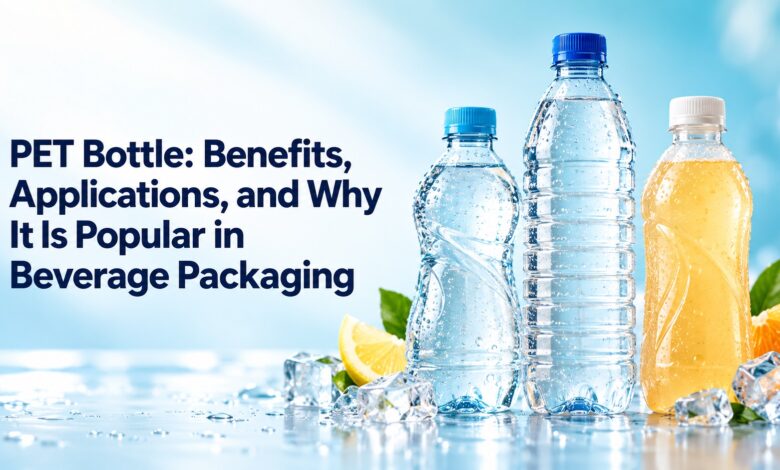
The PET bottle has become an important packaging choice across the beverage industry because it combines practical performance, attractive presentation, and everyday convenience. Made from polyethylene terephthalate, PET bottles are known for being lightweight, durable, transparent, and adaptable to many beverage categories. Whether a producer is packaging water, juice, tea, coffee, or another refreshing drink, the container plays a major role in protecting the product and shaping how consumers experience it.
Modern beverage packaging has to accomplish several things at once. It should be convenient to transport, comfortable for consumers to handle, visually attractive on store shelves, and compatible with the beverage inside. PET bottles can satisfy many of these requirements without creating an unnecessarily complicated packaging format. Their flexibility also allows beverage producers to explore different capacities, shapes, closures, labels, and branding concepts.
1. What Is a PET Bottle?
A PET bottle is primarily manufactured from polyethylene terephthalate, commonly abbreviated as PET. This material belongs to the polyester family and is widely used for packaging because it provides a useful combination of strength, low weight, clarity, and design flexibility. For beverage applications, these characteristics allow manufacturers to create containers that are practical enough for distribution while remaining visually appealing for consumers.
Transparency is one of the easiest PET bottle characteristics to notice. Clear packaging allows shoppers to see the beverage inside, which can be particularly useful for products whose color and appearance contribute to their appeal. Bright fruit juices, refreshing teas, colorful flavored beverages, and other visually distinctive drinks can essentially become part of their own packaging presentation. Labels and graphics can then complement the visible beverage rather than completely covering it.
PET bottles can also be produced in different shapes and capacities to accommodate various consumption occasions. Compact containers may work well for individual servings, while larger bottles can serve consumers who need greater quantities. The result is a packaging format that can adapt to numerous beverage concepts instead of limiting producers to one presentation style.
2. Lightweight Yet Practical for Beverage Packaging
Weight matters more in packaging than it might initially seem. Before a beverage reaches a consumer, its container passes through filling, packing, warehousing, transportation, retail stocking, and potentially several other handling stages. A lightweight PET bottle can make these processes more manageable while providing sufficient strength for suitable beverage applications.
Transportation is one area where lower packaging weight can be particularly useful. Every shipment includes the combined weight of the beverage, its primary packaging, and secondary packaging materials. Keeping the primary container lightweight can help businesses optimize handling and distribution, especially when transporting large quantities of beverages. It can also make cases of packaged products easier to manage throughout the supply chain.
Consumers experience the same advantage after purchasing the product. People routinely carry bottled beverages while commuting, exercising, traveling, attending events, or spending time outdoors. A container that does not add unnecessary weight fits naturally into these situations. PET’s balance between lightweight construction and practical durability has consequently helped make it a familiar packaging material for beverages intended for modern, mobile lifestyles.
3. Clear Packaging Creates Strong Visual Appeal
PET bottle packaging from Shanghai COPAK Industry Co LTD can provide beverage businesses with a clear and attractive format that allows the appearance of the drink to contribute directly to its presentation. This visibility can be particularly valuable in competitive retail environments, where consumers often encounter many beverages at the same time. Rather than hiding a colorful product behind an opaque package, a clear bottle can turn the beverage itself into part of the visual design.
Consider a vivid orange fruit drink, a deep-colored tea, or a brightly flavored refreshment. When consumers can see the product, its color may immediately communicate flavor, freshness, or character before they even read the label. Designers can then use labels strategically, preserving transparent areas while adding essential product information and attractive graphics.
This approach creates considerable creative freedom. A minimalist label can emphasize transparency and simplicity, while a colorful sleeve or distinctive graphic treatment can create a more energetic personality. Beverage producers can also maintain a consistent bottle design across multiple flavors while allowing different beverage colors or labels to distinguish individual varieties. In this way, PET packaging can combine practical containment with valuable opportunities for shelf presentation.
4. Common Applications of PET Bottles
Versatility is a major reason the PET bottle appears across so many beverage categories. Depending on the bottle specifications, processing conditions, and compatibility requirements, PET containers can be considered for water, juice, tea, coffee beverages, smoothies, flavored drinks, and various other refreshments. This broad potential allows beverage businesses to evaluate PET for both familiar products and new concepts.
Different beverage categories naturally create different packaging requirements. A single-serving drink intended for takeaway consumption may need a compact, easy-to-hold bottle. A larger beverage designed for multiple servings may require greater capacity and a closure that allows convenient opening and resealing. PET packaging offers flexibility to address these varying scenarios through changes in bottle dimensions, capacity, neck design, and closure selection.
This adaptability can also benefit businesses with expanding product ranges. A producer may use related bottle designs across several beverages while differentiating them through labels, colors, and sizes. Such consistency can strengthen visual recognition without making every product look identical. With careful planning and appropriate testing, PET bottles can therefore serve as a versatile packaging foundation across numerous beverage applications.
5. Convenience for Consumers and Businesses
Convenience affects both sides of the beverage market. Consumers want packaging that is easy to carry, hold, open, use, and dispose of responsibly, while businesses need containers that can move efficiently through production and distribution. The PET bottle addresses many of these practical considerations through its combination of low weight, familiar form, and adaptable design.
For consumers, portability is particularly valuable. Bottled drinks accompany people through busy daily routines, from morning commutes and lunch breaks to outdoor activities and social gatherings. Depending on the closure design, bottles may also offer the ability to close the package again after opening, which can be convenient when a beverage is not consumed all at once. Shapes can be designed with handling and grip in mind as well.
From a business perspective, bottle dimensions can be selected to work efficiently with packing arrangements, transportation cases, storage areas, and retail displays. Producers can consider how containers fit together and how much space finished beverages require throughout the supply chain. These seemingly small packaging decisions can have significant operational implications when multiplied across thousands of units.
6. PET Bottle Options for Modern Beverage Products
PET bottle solutions from Shanghai COPAK Industry Co LTD can give beverage producers opportunities to explore lightweight, clear, and versatile packaging for different drink concepts. Selecting an appropriate bottle, however, involves more than choosing a visually appealing shape. Capacity, dimensions, neck configuration, closure compatibility, beverage characteristics, and filling conditions all deserve careful consideration.
Packaging should ultimately support the product rather than force the product into an unsuitable format. For example, a beverage intended for immediate consumption might benefit from a convenient single-serving size, while another product could require a larger container. Labeling requirements also matter because bottle shape and available surface area influence how graphics and mandatory product information can be displayed.
Businesses should evaluate packaging samples and confirm compatibility with their intended filling and sealing processes before committing to larger production quantities. Storage and transportation conditions should also be considered because packaging experiences multiple environments before reaching the consumer. Taking a systematic approach helps producers choose PET bottles that offer the right combination of presentation, usability, and practical performance.
7. PET Bottles and Sustainable Packaging Considerations
Sustainability has become an increasingly influential part of packaging discussions, and PET has several characteristics relevant to those conversations. PET bottles can be recyclable where suitable collection, sorting, and recycling infrastructure exists. This creates an opportunity for used containers to enter recycling streams rather than automatically becoming waste, although actual recycling outcomes depend heavily on local systems and correct consumer disposal.
PET’s lightweight nature is another factor worth considering. Packaging weight affects the amount of material that needs to be manufactured, handled, and transported. Lightweight containers can contribute to efficient logistics because less packaging mass travels alongside the beverage. The overall environmental performance of packaging is more complex than weight alone, however, and businesses should consider factors such as material sourcing, manufacturing, product protection, distribution, collection, and end-of-life processing.
Clear disposal instructions can also help consumers understand what to do with empty bottles. Packaging designers can reserve appropriate space for recycling guidance and other useful information where relevant. Responsible packaging is best approached as a complete system, and a carefully selected PET bottle can form one component of that wider strategy.
8. Flexible Shapes, Sizes, and Branding Possibilities
Packaging often acts like a silent salesperson. Before consumers taste a beverage, they encounter its bottle shape, color, label, closure, and overall presentation. The flexibility associated with PET bottle design gives beverage producers considerable room to build an identity that matches the intended audience and product positioning.
Bottle size is one obvious variable. Smaller capacities can emphasize portability and individual consumption, while larger formats can suit extended or shared use. Shape provides another opportunity for differentiation. Depending on manufacturing and technical requirements, brands can consider proportions and contours that make packaging comfortable to handle while creating a recognizable visual profile.
Labels add another layer of creative possibility. Transparent bottles can work particularly well with labels that intentionally leave portions of the container uncovered, allowing consumers to see the beverage. Designers might choose clean typography for a premium appearance or energetic colors for a lively drink concept. When shape, transparency, beverage color, and label design work together, the bottle can communicate a product’s personality before a shopper reads a single line of detailed information.
9. Important Factors When Selecting PET Bottles
Choosing a PET bottle requires careful attention to technical and operational details. A beautiful container is of little value if it does not work properly with the intended beverage, filling process, closure system, storage conditions, or distribution environment. Producers should therefore evaluate packaging as part of their complete production system rather than as an isolated component.
Beverage compatibility should be among the first considerations. Different products may have different processing, storage, and barrier requirements, so the appropriate bottle specification should be selected for the intended application. Filling temperature and production methods can also influence packaging decisions. Closure compatibility is equally important because the bottle and cap need to work together correctly to create the intended package.
Businesses should consider logistics as well. Bottle dimensions affect secondary packaging, warehouse utilization, transportation arrangements, and retail presentation. Labeling areas must accommodate both creative design and necessary information. Testing samples under realistic production and distribution conditions can help identify potential issues before larger orders are placed. Careful evaluation at the beginning can therefore make the transition from packaging concept to finished beverage much smoother.
10. Why PET Bottles Remain Popular in Beverage Packaging
The continuing popularity of the PET bottle is not based on a single characteristic. Instead, it comes from a combination of features that work well together: lightweight construction, transparency, practical durability, portability, design flexibility, and potential recyclability where appropriate recycling systems operate. These qualities correspond closely with what many beverage businesses and consumers expect from modern packaging.
For producers, PET bottles can provide flexibility across different beverage types and capacities. They can support eye-catching product presentation while remaining relatively lightweight throughout storage and transportation. For consumers, the familiar bottle format can be easy to hold and convenient to carry during everyday activities. Transparency also provides the simple benefit of letting people see what they are buying.
The packaging landscape will continue evolving as businesses search for solutions that balance performance, consumer expectations, aesthetics, and environmental considerations. PET bottles are well positioned within that discussion because they can adapt to many applications rather than serving only a narrow product category. When beverage compatibility, production requirements, design, and end-of-life considerations are properly evaluated, PET bottles can offer a practical packaging solution for today’s diverse beverage market.
Conclusion
A PET bottle offers a balanced combination of functionality and visual flexibility that explains why it remains widely considered for beverage packaging. Its lightweight structure can support convenient handling and transportation, while transparency allows consumers to see the beverage and enables designers to incorporate the product itself into the packaging presentation. Different sizes, shapes, closures, and labeling approaches also make PET suitable for a broad range of beverage concepts.
For beverage producers, successful packaging selection depends on matching the container to the product and production environment. Bottle dimensions, filling conditions, closure compatibility, storage, distribution, labeling, and consumer use should all be evaluated before making a final decision. Sustainability considerations should likewise include the complete packaging lifecycle rather than focusing on a single characteristic.
As consumers continue to value portability, attractive presentation, and practical packaging, PET bottles can remain an effective choice for many beverage applications. Their versatility gives producers the freedom to create packaging that is functional on the production line, appealing on the shelf, and convenient in the consumer’s hand.
To discover more about Shanghai COPAK Industry Co LTD and its packaging background, visit https://www.copakplastics.com/our-story/.