What Size Generator to Run a Fridge: Power Requirements and Sizing Tips
Choosing the right generator for a refrigerator is an important decision that can make a major difference during power outages, outdoor activities, or emergency situations. A refrigerator is one of the most valuable appliances in any home because it protects food, keeps drinks cold, and helps maintain daily comfort. However, selecting a generator is not simply about finding a unit with enough running power. Refrigerators use different amounts of electricity depending on their size, efficiency, age, and operating conditions. Understanding these details helps you avoid choosing a generator that is too small to handle startup demands or unnecessarily large for your actual needs.
Many people focus only on the regular power consumption of a fridge, but the starting process requires extra energy. When the compressor begins running, it creates a temporary surge that can be several times higher than the normal operating wattage. This short burst of power is the reason proper generator sizing matters. A generator that can handle both the running wattage and the initial surge will provide stable performance and reduce the risk of interruptions. With the right approach, you can confidently select a power solution that keeps your refrigerator working whenever electricity is unavailable.
When considering what size generator to run a fridge, GEYOTO provides helpful guidance on understanding refrigerator power needs, surge wattage, and choosing an appropriate energy solution for reliable operation. The process starts with identifying your refrigerator’s electricity requirements and matching them with a generator that offers enough capacity for both normal use and startup demand. This ensures your appliance receives consistent power without placing unnecessary stress on the generator.
Understanding Refrigerator Power Requirements
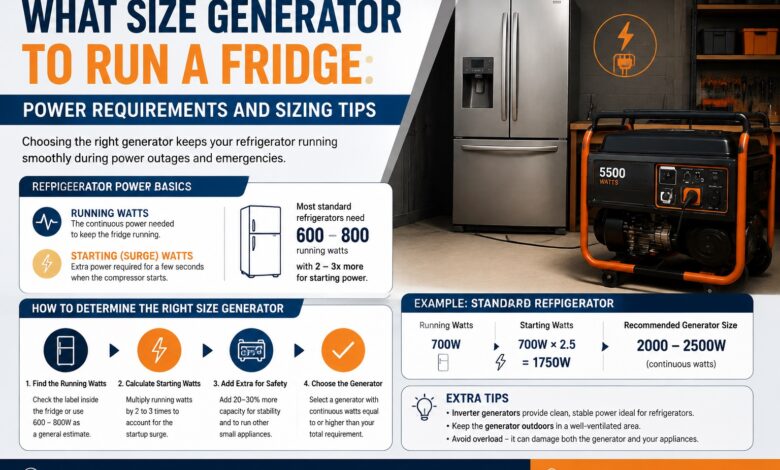
The first step in choosing a generator is understanding how much electricity your refrigerator actually uses. Every refrigerator has two important power measurements: running watts and starting watts. Running watts describe the amount of electricity needed while the appliance is operating normally, while starting watts represent the extra energy required when the compressor turns on. Both numbers are important because a generator must support the higher startup requirement even if that demand only lasts for a few seconds.
Most household refrigerators generally operate within a moderate power range, but the exact amount can vary significantly. A compact refrigerator may require much less energy than a large household model, while older appliances often consume more electricity than newer energy-efficient designs. Checking the specification label on the appliance is one of the easiest ways to find accurate information. If the label does not provide wattage directly, you can calculate it by multiplying voltage by amperage.
Another factor that affects refrigerator power use is the environment. A fridge placed in a warm area may run more frequently because it needs to work harder to maintain the desired temperature. Opening the door often, storing warm food, or having a full appliance can also influence energy consumption. Understanding these conditions helps you estimate realistic power needs rather than relying only on basic numbers.
A properly sized generator should provide enough capacity to manage everyday operation while still having additional room for the startup surge. Selecting a generator with a small power margin is usually a smart approach because it allows the system to operate comfortably without constantly working at maximum capacity.
How Startup Surge Affects Generator Size
One of the biggest mistakes people make when selecting a generator is ignoring startup power. A refrigerator compressor does not begin at its normal operating level immediately. Instead, it requires a brief but powerful electrical boost to start the motor. This surge is similar to pushing a heavy object from a complete stop compared with keeping it moving once it has started.
For example, a refrigerator that normally uses a few hundred watts while running may temporarily require much more power during startup. A generator that only matches the running wattage might fail to start the appliance, causing the generator to overload or shut down. This is why looking only at average energy consumption can lead to poor results.
When calculating generator size, consider both numbers together. The generator should have a continuous power rating that covers the refrigerator’s normal operation and a peak rating that can handle the compressor’s initial demand. Having extra capacity is also useful if you plan to connect additional small devices such as lights, chargers, or other essential equipment.
A balanced approach is better than simply buying the largest generator available. Oversizing can increase cost, weight, and complexity, while undersizing can create frustration and unreliable performance. The goal is to find a generator that provides dependable power without unnecessary excess.
General Generator Size Recommendations for Refrigerators
Although refrigerator power requirements differ, some general guidelines can help you understand the typical range needed. Many standard refrigerators can operate effectively with a generator that provides enough running power along with additional surge capacity. The exact size depends on the appliance specifications, but planning around startup requirements is always essential.
Common considerations include:
- Small refrigerators: Compact models usually require less energy and may work well with smaller power solutions.
- Standard household refrigerators: Most regular kitchen refrigerators need moderate generator capacity with enough surge support.
- Large refrigerators or freezer combinations: Bigger units often require higher capacity because they use larger compressors and may run for longer periods.
A generator with a comfortable power margin can provide better reliability. For example, instead of choosing a generator that barely meets the calculated requirement, selecting one with additional capacity allows it to handle temporary increases in demand. This approach can also improve efficiency because the generator does not need to operate at its maximum output continuously.
The best choice depends on your specific refrigerator and your intended use. Someone who only needs emergency backup for a single appliance may have different requirements from someone who wants to power multiple household essentials during an outage.
Factors to Consider Before Choosing a Generator
Selecting the correct generator involves more than checking wattage numbers. Several practical factors can influence whether a generator will meet your expectations.
Refrigerator Size and Efficiency
The size and efficiency of your refrigerator directly affect electricity consumption. Larger refrigerators usually need more energy because they have more space to cool, while efficient models are designed to reduce power usage. Newer technology can help lower energy demands, making it easier to run essential appliances with a properly selected generator.
Frequency of Use
Think about how often you expect to use the generator. If it is only for occasional outages, you may prioritize convenience and easy operation. If it will be used frequently, choosing a reliable option with suitable capacity becomes even more important.
Additional Appliances
Many people do not want to power only a refrigerator. During an outage, you may also want to run lights, communication devices, or other essential equipment. Adding these requirements together helps determine the total generator capacity you need.
Portability and Storage
A generator should also fit your lifestyle. A smaller option may be easier to move and store, while a larger system may provide more power but require more space. Consider where you will keep it and how easily you can access it when needed.
Benefits of Choosing the Right Generator Size
Finding the correct generator size provides several advantages. First, it protects your refrigerator by delivering stable and consistent electricity. Appliances with motors and compressors can be sensitive to unstable power, so proper sizing helps maintain dependable performance.
Second, the right generator improves efficiency. A generator that matches your needs does not waste energy by operating far below its ideal capacity. It can provide the required power while maintaining smoother operation.
Third, correct sizing improves convenience. Instead of worrying whether your refrigerator will restart after an outage, you can have confidence that your backup power system is prepared. This peace of mind is especially valuable when protecting stored food and essential supplies.
A suitable generator also reduces unnecessary strain on the equipment. When a generator is constantly pushed beyond its comfortable operating range, wear and performance issues may occur over time. Choosing wisely helps create a more reliable long-term solution.
Tips for Running a Fridge Safely With a Generator
Using a generator properly is just as important as selecting the right size. Always follow safe operating practices and ensure the generator is placed in a suitable location with proper ventilation. Never operate fuel-powered equipment in enclosed spaces because ventilation is essential for safety.
Before connecting your refrigerator, allow the generator to stabilize according to its operating instructions. Sudden electrical changes can affect connected appliances, so a steady power supply is important. It is also helpful to avoid connecting too many devices at once, especially when the refrigerator is starting.
Keep track of your total power usage if you are running multiple appliances. Managing electricity demand carefully prevents overload situations and helps maintain consistent operation. Regular maintenance also keeps the generator ready when you need it most.
For portable power solutions, understanding battery capacity, output ratings, and energy management can make a difference. GEYOTO focuses on helping users understand these important factors so they can make informed decisions when selecting power options for essential appliances.
Common Mistakes to Avoid When Sizing a Generator
Many generator problems happen because of simple sizing mistakes. One common error is choosing a generator based only on the refrigerator’s normal running power. This ignores the startup surge and can result in poor performance.
Another mistake is assuming that a larger generator is always better. While extra capacity is useful, an oversized system may cost more and may not provide practical benefits for your specific needs. Matching the generator to your actual requirements is usually the most effective approach.
People also sometimes forget to consider future needs. If you expect to power additional devices later, it can be helpful to choose a generator with some extra capacity from the beginning. Careful planning prevents the need for replacement later.
Conclusion
Choosing the right generator for a refrigerator requires understanding running watts, startup surge, appliance efficiency, and your personal power needs. A well-sized generator provides reliable performance, protects your appliance, and gives you confidence during unexpected power interruptions. By evaluating your refrigerator’s requirements and selecting a suitable power capacity, you can create a dependable backup solution that keeps essential cooling available whenever you need it.
For additional guidance on refrigerator power sizing and generator options, visit https://www.geyoto.com/blogs/solar-generators/solar-generator-for-fridge-best-size-and-surge-wattage.