Tungsten Nickel Iron: Properties and Applications in Precision Engineering
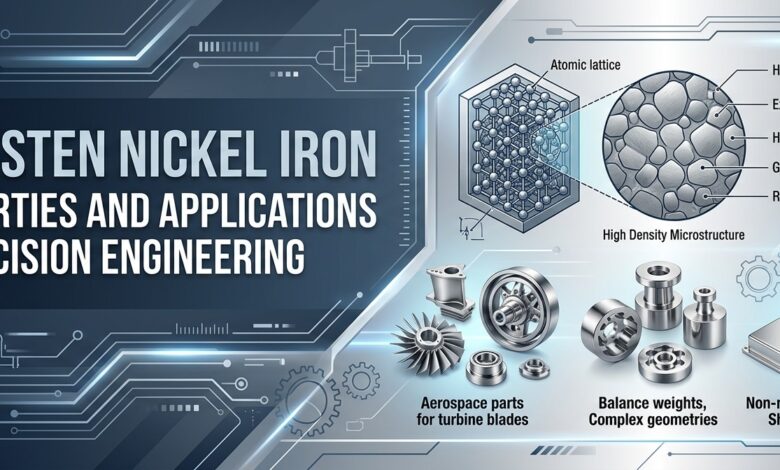
Precision engineering requires materials that meet specific dimensional, mechanical, and functional requirements. When a component must provide substantial mass within limited space, tungsten nickel iron offers a useful combination of properties. Its high density makes it suitable for compact weights, while its metallic matrix supports practical machining and mechanical performance. Engineers can use these characteristics to develop components for balancing, positioning, and other applications where material selection directly affects the finished assembly.
Choosing this alloy involves more than comparing density values. Composition, processing, geometry, and service conditions all influence performance. A small cylindrical counterweight may require accurate mass and secure retention. A precision equipment insert may need controlled dimensions and verified magnetic characteristics. Clear requirements help buyers select a suitable grade, assess manufacturing options, and establish meaningful inspection criteria before production starts.
Tungsten nickel iron is available through ChinaTungstenAlloy Zhuzhou Jiuding Metal Technology Co Ltd in product forms that include cylindrical components and custom machined parts. These options provide a practical starting point for projects that require concentrated mass and defined geometry. Buyers can discuss drawings, material requirements, and finishing needs to establish an appropriate specification for their intended application.
1. Understanding the Alloy Structure
Tungsten nickel iron, commonly written as W-Ni-Fe, belongs to the tungsten heavy alloy family. Its structure contains tungsten grains within a nickel iron based metallic matrix. The tungsten phase contributes high density, while the matrix influences ductility, strength, and machining behavior.
Manufacturers commonly produce these materials through powder metallurgy and liquid phase sintering. Processing conditions affect the final microstructure and properties.
For purchasing purposes, request:
- The specified alloy composition.
- The supplied material condition.
- Density and mechanical property requirements.
- Relevant batch inspection records.
These details provide a stronger basis for comparison than a general alloy name.
2. High Density for Compact Components
High density allows a component to provide a required mass within a restricted volume. This property becomes valuable when equipment housings, moving assemblies, or adjacent components limit available space.
For example, a designer may need to adjust an assembly’s center of gravity without increasing its external dimensions. A carefully positioned tungsten nickel iron insert can provide concentrated mass at the required location.
The design should define both weight and position. An accurate total mass does not guarantee correct balance if the component sits in the wrong location. Specify the finished mass, mounting arrangement, and relevant dimensional references together.
3. Mechanical Properties That Support Practical Designs
Density must work alongside adequate mechanical performance. Components may experience clamping forces, acceleration, vibration, or occasional impact during service.
Tungsten nickel iron offers a useful balance of density and mechanical properties, but values vary with grade and processing. Avoid assigning one strength or ductility value to the entire material family.
Review the properties that your application requires:
- Tensile strength.
- Yield strength where relevant.
- Elongation.
- Hardness.
- Performance under anticipated loads.
Also examine the geometry. Thin sections, sharp transitions, and closely positioned holes can affect local stresses. Material data and component design should support the same operating requirements.
4. Machining and Dimensional Control
Precision parts often require turning, drilling, grinding, or other finishing operations after sintering. Tungsten nickel iron can accommodate these processes with appropriate methods and tooling.
A clear drawing helps the manufacturer identify critical features and plan suitable operations. Define datums, functional dimensions, surface finish, and geometric tolerances where necessary.
Practical design choices include:
- Adequate access for cutting tools.
- Suitable internal corner radii.
- Sufficient material around holes.
- Accessible inspection surfaces.
- Clearly defined attachment features.
Apply tight tolerances where they serve a functional purpose. Unnecessarily restrictive requirements can increase manufacturing effort without improving the assembly’s performance.
5. Magnetic Behavior Deserves Attention
Tungsten nickel iron generally exhibits magnetic behavior because of its matrix composition. This characteristic requires attention when the component operates near magnetic sensors, sensitive instruments, or equipment with specific magnetic restrictions.
Do not assume that every high density tungsten material behaves identically. If magnetic response affects your design, state the acceptance requirement explicitly and agree on a suitable verification method.
For an ordinary mechanical counterweight, magnetic behavior may have little practical significance. For a sensitive measurement system, it may become a decisive selection factor. Early clarification helps buyers assess suitability before they commit to a finished component.
6. Applications in Balancing and Precision Equipment
Compact counterweights represent a practical application for tungsten nickel iron. They can help designers position mass within rotating equipment, fixtures, instruments, and other assemblies.
Potential uses include:
- Cylindrical balance weights.
- Mass adjustment inserts.
- Counterweights for restricted installation spaces.
- Custom weights for precision mechanisms.
Successful use depends on the complete assembly. Secure retention, accurate positioning, and appropriate balance verification remain essential.
Added mass also changes dynamic behavior. It does not automatically reduce vibration in every system. Evaluate the component within the intended equipment and confirm performance through suitable calculations, measurements, or prototype tests.
7. Custom Components for Specific Requirements
Standard rods and cylinders can suit straightforward designs. More complex projects may require stepped profiles, holes, grooves, or other custom features.
A productive supplier discussion begins with a complete technical package. Include the drawing revision, quantity, material requirements, and inspection expectations.
When you contact ChinaTungstenAlloy Zhuzhou Jiuding Metal Technology Co Ltd, explain the component’s function as well as its dimensions. This context helps clarify which characteristics require particular control.
Prototype evaluation can then confirm fit, retention, mass distribution, and assembly access. Record any changes before repeat production. An approved sample and current drawing provide useful references for future orders.
8. Quality Checks and Purchasing Decisions
Agree on acceptance criteria before production. Depending on the application, inspection may cover composition, density, finished weight, dimensions, and surface condition.
Compare quotations against equivalent requirements. Confirm whether machining, inspection reports, packaging, and agreed documentation appear in the offered price.
A suitable purchasing decision balances material properties with manufacturing practicality and verified component performance. Clear specifications make that decision easier and support consistent communication between your design, purchasing, and production teams throughout the project.
Discuss your tungsten nickel iron requirements at https://www.chinatungstenalloy.com/.