PTFE PCB Material Properties: Benefits for Microwave and RF Applications
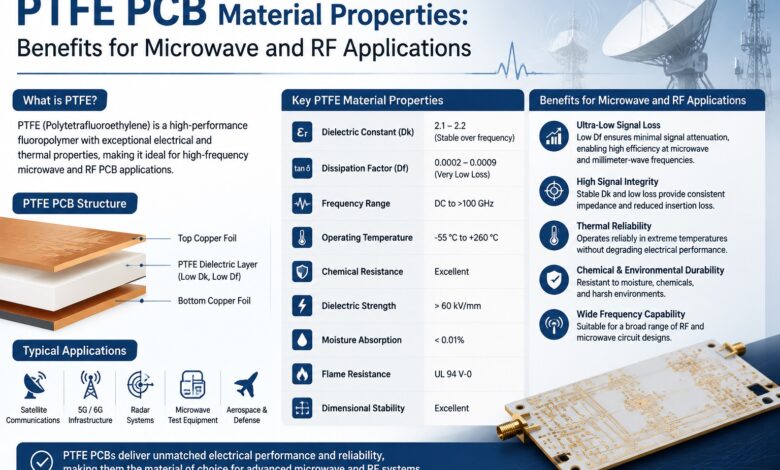
PTFE PCB material properties play a major role in the development of high-performance microwave and RF circuits where signal accuracy, stability, and reliability are essential. Polytetrafluoroethylene, commonly known as PTFE, is widely recognized for its excellent electrical characteristics, making it suitable for demanding applications that require consistent performance at high frequencies. Unlike standard circuit materials used for general electronic designs, PTFE-based materials are engineered to handle complex signal requirements where small variations can affect overall system operation. Understanding these properties helps engineers select suitable materials, improve circuit efficiency, and create reliable solutions for advanced electronic applications.
The unique characteristics of PTFE come from its low electrical loss, stable dielectric behavior, and strong resistance to environmental changes. These advantages allow microwave and RF circuits to maintain better signal quality, especially when operating at higher frequencies. Material selection is one of the most important steps in PCB development because the physical and electrical properties of the substrate directly influence the final performance of the circuit. By learning how PTFE behaves under different conditions, designers can create more predictable layouts and reduce potential performance issues during production and operation.
PTFE PCB material properties provide valuable insights through RichPCBA, helping engineers understand the important characteristics required for microwave and RF PCB applications. RichPCBA supports advanced PCB solutions by focusing on quality manufacturing processes and technical requirements that help customers achieve dependable circuit performance. Having access to accurate material information makes it easier to evaluate electrical behavior, design requirements, and application suitability before beginning a project.
Understanding PTFE PCB Material Characteristics
PTFE is a high-performance substrate material known for its excellent electrical properties and chemical stability. In RF and microwave applications, materials must provide reliable signal transmission while minimizing losses that can reduce efficiency. PTFE materials offer a combination of low dielectric loss and stable electrical performance, allowing circuits to operate effectively in challenging environments.
One of the most important characteristics of PTFE PCB materials is their ability to maintain consistent performance across a wide range of frequencies. High-frequency signals are sensitive to changes in material properties, and even minor inconsistencies can influence impedance control and signal integrity. PTFE helps designers achieve more predictable results because of its stable dielectric behavior.
The material also provides excellent resistance to moisture absorption. Environmental conditions can impact PCB performance, especially in applications exposed to changing temperatures or humidity levels. PTFE’s low moisture absorption helps maintain electrical characteristics and supports long-term reliability.
Key Electrical Properties of PTFE PCB Materials
The electrical properties of PTFE make it a preferred choice for specialized RF and microwave designs. These properties determine how efficiently signals move through the circuit and how well the PCB performs during operation.
Low Dielectric Loss
A major advantage of PTFE materials is their low dielectric loss. When signals travel through a PCB, some energy can be lost because of material resistance. Lower loss characteristics help preserve signal strength and improve transmission efficiency.
This feature is especially valuable in microwave applications where maintaining signal quality is critical. Reduced energy loss allows circuits to perform more effectively while supporting accurate communication and processing functions.
Stable Dielectric Constant
A stable dielectric constant helps engineers maintain predictable electrical performance. The dielectric constant affects signal speed and impedance, which means consistency is important for accurate circuit calculations.
When the dielectric properties remain stable, designers can create layouts with improved control and fewer unexpected changes during testing. This stability is one reason PTFE materials are commonly considered for precision applications.
Excellent High-Frequency Performance
PTFE PCB materials are designed to perform well at high frequencies where traditional materials may experience greater signal challenges. Their electrical characteristics allow them to support applications that require fast signal movement and reliable performance.
Benefits of PTFE PCB Materials for Microwave Applications
Microwave circuits require materials that can handle demanding operating conditions while maintaining accuracy. PTFE offers several benefits that make it suitable for these applications.
The first major benefit is improved signal integrity. Because PTFE provides low electrical loss and stable characteristics, signals can travel with reduced interference and distortion. This helps maintain the accuracy required in advanced communication and sensing systems.
Another advantage is design flexibility. Engineers can use PTFE materials when developing complex circuits that require careful control over electrical parameters. The predictable nature of the material allows for more efficient design processes and improved confidence before manufacturing begins.
PTFE also supports reliable operation in environments where temperature changes and exposure to moisture may occur. Its resistance to environmental factors helps maintain consistent performance throughout the product lifecycle.
Why PTFE Is Suitable for RF Circuit Designs
RF circuit designs often require extremely precise control because high-frequency signals can be affected by small material differences. PTFE provides characteristics that help designers manage these challenges effectively.
The combination of low loss, stable electrical behavior, and environmental resistance makes PTFE a practical choice for many RF applications. Engineers can use this material when performance requirements exceed the capabilities of standard PCB substrates.
Another important advantage is durability. A PCB material must not only perform well during initial testing but also maintain its characteristics over time. PTFE’s chemical stability and resistance to external influences contribute to long-lasting circuit reliability.
Important Factors When Selecting PTFE PCB Materials
Although PTFE offers many advantages, choosing the correct material requires careful consideration of the complete application. Engineers need to evaluate frequency requirements, mechanical structure, thermal conditions, and manufacturing needs before making a final decision.
Important considerations include:
- Operating frequency range.
- Required electrical performance.
- Board construction requirements.
- Environmental conditions.
- Long-term reliability expectations.
A complete evaluation ensures that the selected material matches the project goals. Proper planning helps prevent design changes and supports smoother development from the initial concept to the finished PCB.
Manufacturing Considerations for PTFE-Based PCBs
PTFE materials require careful handling during PCB manufacturing because their unique characteristics differ from conventional substrates. Proper processing methods are important to maintain material performance and achieve accurate circuit results.
Manufacturing precision affects factors such as layer alignment, surface quality, and overall electrical consistency. Working with experienced PCB specialists helps ensure that material advantages are fully utilized during production.
RichPCBA focuses on supporting PCB manufacturing requirements by helping customers develop reliable solutions based on their technical needs. Understanding material behavior and production requirements together creates better outcomes for demanding RF and microwave projects.
Applications That Benefit From PTFE PCB Materials
PTFE PCB materials are used in applications where signal reliability and high-frequency performance are priorities. These include advanced communication systems, microwave equipment, testing systems, and other electronic solutions that require precise electrical control.
The growing demand for faster and more reliable electronic systems continues to increase the importance of advanced PCB materials. As applications become more complex, engineers need materials that can support higher frequencies without sacrificing stability.
PTFE remains valuable because it provides a balanced combination of electrical performance, durability, and reliability. Its properties make it a strong option for designers working on challenging electronic projects.
Conclusion
PTFE PCB material properties provide significant advantages for microwave and RF applications by offering low loss, stable dielectric performance, and strong environmental resistance. Understanding these characteristics helps engineers make better material choices and develop circuits with improved reliability and efficiency. With the right evaluation process, PTFE materials can support advanced electronic designs that require consistent performance in demanding conditions.
For more information about RichPCBA and its services, visit https://www.richpcba.com/about-us/.