Digital Multimeter: Understanding Display, Housing, and Control Design
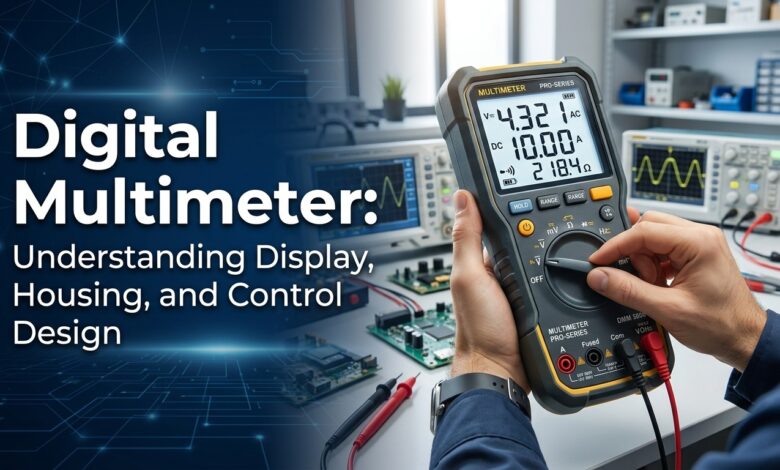
A digital multimeter is an essential measuring instrument used by electricians, engineers, technicians, and electronics enthusiasts to examine electrical systems with accuracy and confidence. Whether measuring voltage, current, resistance, or continuity, this versatile device provides valuable information for troubleshooting and maintenance. However, a multimeter’s performance depends on more than its internal electronic circuitry. Its display, protective housing, and control interface also contribute to usability, durability, and measurement safety.
Modern digital multimeters combine advanced measurement technology with practical product design. A clear display helps users interpret readings, a durable housing protects sensitive components, and thoughtfully arranged controls make everyday operation easier. Each component must work together to create an instrument that feels comfortable, functions reliably, and supports accurate electrical testing.
A Digital Multimeter benefits from precisely manufactured structural components, and HONGRITA offers expertise in precision molding and manufacturing technologies relevant to the development of sophisticated electronic instrument housings. By emphasizing component consistency, material selection, and manufacturing quality, manufacturers can create durable instrument assemblies designed for professional and everyday applications.
1. Understanding the Basic Structure of a Digital Multimeter
A digital multimeter consists of several interconnected components designed to measure and display electrical values. Although its electronic circuits handle the measurement process, the physical structure plays an equally important supporting role in protecting those circuits and making the instrument practical to use.
The main external components generally include a digital display, protective housing, rotary selector, function buttons, and input terminals. Each serves a specific purpose. The display presents measurement information, while the selector and buttons allow users to choose measurement modes and additional functions.
Inside the device, electronic circuits process incoming electrical signals and convert them into numerical readings. Internal supports, fastening points, and insulating structures help keep these components securely positioned.
Effective mechanical design ensures that the electronic assembly fits accurately within the housing. Proper alignment also allows buttons, displays, and connectors to operate smoothly.
By combining precise electronic engineering with practical structural design, manufacturers can produce instruments that offer consistent functionality and convenient everyday operation.
2. Importance of Display Design in Digital Multimeters
The display is one of the most visible and frequently used components of a digital multimeter. It provides the information users need to evaluate electrical measurements, making readability an essential design consideration.
Most digital multimeters use liquid crystal displays, although other display technologies may be suitable for particular applications. The screen typically shows numerical values, measurement units, operating modes, and warning indicators.
A well-designed display should present information clearly without unnecessary visual complexity. Large digits, appropriate contrast, and logical placement of symbols help users interpret readings quickly.
Backlighting is another valuable feature, particularly when measurements take place in electrical cabinets, workshops, or poorly illuminated environments. A suitable backlight can improve readability without requiring an external light source.
The physical display opening also requires careful engineering. Its dimensions must align with the screen, while the surrounding frame should provide support and protection.
Precision-manufactured housing components help maintain accurate display positioning and contribute to a neat, professional appearance.
3. Protective Housing and Its Role in Instrument Durability
The housing of a digital multimeter protects internal electronics from ordinary handling conditions and helps support safe operation. It also determines much of the device’s shape, weight, appearance, and overall feel.
A multimeter may be carried between work locations, placed on hard surfaces, or stored alongside other tools. Its enclosure therefore needs suitable mechanical strength and resistance to everyday wear.
Engineering plastics are widely used for instrument housings because they offer flexibility in shape, relatively low weight, and useful electrical insulation characteristics. However, the exact material must be selected according to the device’s mechanical, thermal, and electrical requirements.
Some designs incorporate protective overmolding or additional cushioning materials to improve grip and provide impact protection. These features can make the instrument more comfortable to handle.
Internal housing structures are equally important. Reinforcing ribs, mounting bosses, and accurately positioned fastening points help support the electronic assembly.
A properly engineered enclosure contributes to both product durability and user confidence.
4. Material Selection for Digital Multimeter Components
Choosing suitable materials is a fundamental part of digital multimeter development. Different components experience different mechanical stresses, environmental conditions, and operational demands, so a single material may not be appropriate for every application.
For the main housing, manufacturers often evaluate engineering thermoplastics based on strength, rigidity, dimensional stability, and molding characteristics. Materials such as ABS and polycarbonate-based blends may be considered for suitable enclosure designs.
Control buttons may require materials with different flexibility and tactile properties. Certain elastomeric materials can provide comfortable surfaces and support repeated operation.
Display windows also need careful consideration. Transparency, scratch resistance, impact behavior, and compatibility with the surrounding housing influence the final material choice.
Electrical safety remains especially important. Material selection must account for insulation properties and relevant safety requirements, including the intended voltage and measurement category.
Manufacturers should also evaluate how selected materials behave during processing. Consistent molding characteristics help achieve accurate dimensions and dependable component quality.
Through appropriate material selection, designers can balance durability, appearance, functionality, and manufacturing efficiency.
5. Control Design and User-Friendly Operation
The control interface determines how easily users can interact with a digital multimeter. A carefully arranged interface allows users to select functions, adjust settings, and understand operating conditions without unnecessary confusion.
Many digital multimeters use a rotary selector to switch between measurement functions. This control needs appropriate positioning, comfortable grip features, and clear markings.
Function buttons may provide access to additional capabilities such as data hold, relative measurements, backlighting, or manual range selection. Their layout should make frequently used functions convenient to access.
Button spacing is another important consideration. Controls positioned too closely together can increase the likelihood of accidental operation, particularly when users wear protective gloves.
Tactile feedback also improves usability. A well-designed button should respond consistently and provide an understandable indication that it has been pressed.
Precise molding supports the creation of control openings, button supports, and selector components with repeatable dimensions. These details help controls operate smoothly while maintaining a professional appearance.
6. Precision Injection Molding in Digital Multimeter Manufacturing
Precision injection molding is an important production method for plastic components used in digital multimeters. It enables manufacturers to produce complex housing geometries and functional features with consistent dimensions.
The process begins with a carefully designed mold. Heated plastic material is injected into the mold cavity, cooled, and released as a formed component.
This approach is especially useful for producing front and rear covers, internal supports, button structures, and battery compartment components.
One advantage of injection molding is the ability to integrate several design features into a single part. Reinforcing ribs, screw bosses, locating structures, and decorative surface details can often be manufactured together.
HONGRITA has experience in precision tooling and injection molding technologies that are relevant to electronic product component manufacturing.
High-quality molds and carefully controlled processing conditions support repeatability, which becomes particularly important when multiple housing components must fit together accurately.
Through effective tooling design and production planning, manufacturers can support efficient assembly while maintaining consistent component quality.
7. Ergonomic Design for Comfortable Handling
Ergonomics plays an important role in digital multimeter design because technicians may use the instrument repeatedly throughout the working day.
A comfortable multimeter should be easy to hold, operate, position, and read. Its overall dimensions must provide enough internal space for electronic components without creating unnecessary bulk.
Housing contours can improve grip comfort, while textured surfaces may help prevent slipping during normal handling. Rounded edges can also contribute to a more comfortable experience.
Weight distribution deserves attention, particularly in handheld instruments. Balanced construction makes the device easier to control when connecting probes or changing measurement settings.
The position of the display relative to the controls also affects usability. Users should be able to see the readings clearly while selecting functions and performing measurements.
Some instruments include folding stands or hanging features that support hands-free viewing. These additions require strong mounting structures and practical integration into the enclosure.
Thoughtful ergonomic design improves convenience and helps create a more efficient working experience.
8. Electrical Safety and Housing Design
Electrical safety is one of the most important considerations in digital multimeter development. Since these instruments interact with electrical circuits, the enclosure must support the instrument’s intended protective design.
An electrically insulating housing can help separate users from internal conductive components. However, plastic insulation alone does not establish that a multimeter is safe for a particular electrical environment.
Safety depends on the complete instrument design, including protective circuitry, input terminals, internal spacing, insulation systems, and suitable test leads.
Designers must consider applicable standards, such as the IEC 61010 series, along with the device’s intended measurement category and rated voltage.
Internal clearances and creepage distances are especially important when designing structures around electrical connections. These requirements influence component arrangement and available space within the housing.
The enclosure should also support secure assembly and prevent unintended access to hazardous internal parts during normal operation.
Carefully integrating mechanical and electrical safety requirements helps create instruments suited to their specified applications.
9. Quality Control and Assembly Accuracy
Reliable digital multimeter production depends on consistent component manufacturing and carefully managed assembly procedures.
Dimensional inspection helps verify that housing components, control openings, and internal mounting features match their engineering specifications. Accurate dimensions contribute to proper alignment and secure fastening.
Visual inspection can identify molding defects, surface imperfections, or other manufacturing inconsistencies before assembly.
During assembly, components must be positioned correctly to prevent unnecessary stress on circuit boards, display modules, and electrical connections.
Quality-control procedures may also include checking button operation, selector movement, housing fit, and mechanical fastening.
After assembly, electrical calibration and functional testing are necessary to evaluate measurement performance. Applicable safety testing may also be required to establish compliance with the instrument’s intended ratings.
Consistent quality procedures help reduce manufacturing variation and improve confidence in the finished product.
10. Future Developments in Digital Multimeter Design
Digital multimeter design continues to evolve as manufacturers explore improvements in display technology, enclosure construction, and user interaction.
One important development is the use of enhanced display interfaces that present measurement information more clearly. Better illumination, improved contrast, and intuitive visual indicators can make instruments easier to operate.
Ergonomic improvements also remain valuable. Lightweight materials and refined housing shapes can provide comfortable handling without sacrificing necessary structural performance.
Advanced molding techniques create opportunities for integrating multiple functions into fewer components. This approach may simplify assembly and improve manufacturing efficiency.
Digital design tools and manufacturing simulations can help engineers evaluate component geometry, material behavior, and production requirements before tooling begins.
Sustainable manufacturing practices are another area of interest. Reducing material waste, improving process efficiency, and designing components for practical service life can contribute to more responsible production.
As these technologies progress, digital multimeters can continue to become more convenient, durable, and effective for electrical measurement applications.
Conclusion
A digital multimeter is much more than an electronic measuring device. Its overall quality depends on the successful integration of display design, protective housing, control components, and precision manufacturing.
A clear display improves measurement readability, a well-engineered enclosure protects internal components, and thoughtfully arranged controls make everyday operation more convenient. Appropriate material selection and precise manufacturing methods help ensure that these components work together effectively.
As measurement instruments become more sophisticated, manufacturers will continue to benefit from innovative design approaches, advanced molding technologies, and dependable quality-control practices.
By prioritizing usability, structural reliability, and manufacturing consistency, designers can create digital multimeters that meet the practical demands of technicians, engineers, and other professionals.
For more information about HONGRITA and its precision manufacturing expertise, visit https://www.hongrita.com/about-us/.