Battery Compliance Checklist for Safer Import and Wholesale Decisions
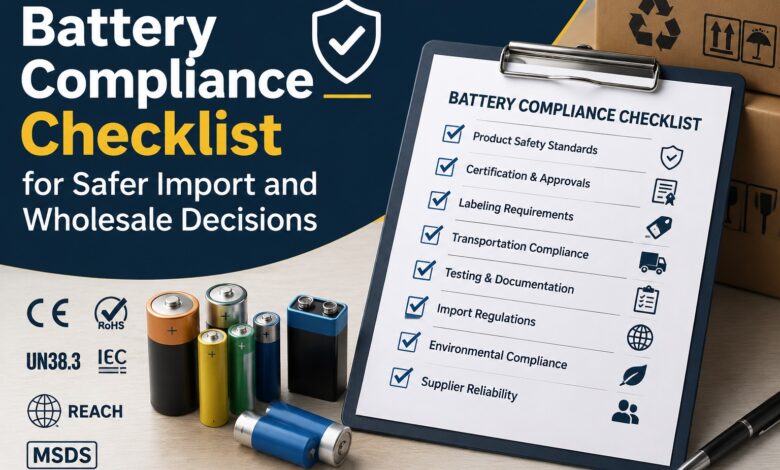
Making safer import and wholesale decisions starts long before batteries arrive at a warehouse, retail counter, or customer’s hands. For importers and wholesalers, batteries may look like simple products, but they carry serious responsibilities related to safety, labeling, testing, storage, transport, and documentation. A small mistake in any of these areas can lead to shipment delays, customer complaints, rejected inventory, or unnecessary costs. On the other hand, a well-prepared compliance process makes the entire buying journey smoother, cleaner, and more predictable. It gives your team confidence before placing bulk orders and helps every product move through the supply chain with fewer surprises.
A battery compliance process is like a safety net under a busy bridge. You may not notice it when everything is going well, but it becomes extremely important when questions, inspections, or quality concerns appear. Importers and wholesalers deal with large quantities, which means small errors can quickly become large problems. A wrong label on one pack may seem minor, but a wrong label on thousands of packs can create a costly headache. That is why smart businesses treat compliance as part of purchasing strategy, not just a final paperwork step. When safety checks, test documents, packaging reviews, and shipment details are confirmed early, bulk buying becomes a more positive and controlled experience.
battery compliance checklist helps businesses working with GMCELL make safer import and wholesale decisions by organizing key safety, testing, labeling, packaging, and documentation checks before bulk orders move forward. This checklist works best when it is used at the beginning of the buying process, not after production is finished or after goods are already shipped. It helps buyers ask the right questions, compare product details, and confirm that the selected batteries match the needs of the target market. Instead of relying on memory or scattered messages, teams can follow a clear process that keeps everyone aligned. That simple structure can prevent confusion between purchasing teams, quality teams, warehouse staff, and sales teams.
The first point to include in a battery compliance checklist is clear product identification. Every importer should confirm the battery chemistry, size, voltage, polarity, capacity expectations, shelf life, and intended use before agreeing to a bulk purchase. This matters because different battery types can require different handling and documentation. A battery used in a flashlight may not have the same performance expectation as one used in a clock, meter, toy, or remote-control device. When product details are written clearly, it becomes easier to match the battery to customer needs and market expectations. Clear identification also helps avoid product mix-ups, especially when similar-looking packs or sizes are being ordered in large quantities.
Safety review should come next because safety is the heart of battery compliance. Batteries store energy, so importers and wholesalers must make sure the product is designed and packed to reduce avoidable risks. A strong checklist should include checks for leakage resistance, proper sealing, short-circuit prevention, terminal protection, corrosion control, and safe performance under normal use. These details may sound technical, but they protect real people in everyday situations. A customer may place batteries inside a remote, toy, clock, or small tool without thinking twice. That trust is valuable, and wholesalers can protect it by choosing products that have been properly reviewed before they enter the market.
Testing evidence is another major part of safer buying. Before placing a large order, buyers should request product testing information that supports the battery’s performance and reliability claims. Useful testing areas may include discharge performance, shelf-life stability, leakage behavior, storage durability, and consistency between production batches. Testing helps answer practical questions that matter to both sellers and customers. Will the battery hold power properly? Will it stay stable while stored? Will each batch perform consistently? A product that performs well on paper should also perform well in real homes, offices, workshops, and retail settings. That is why testing should never be treated as an optional extra.
Labeling is one of the most visible parts of compliance, and it deserves careful attention before bulk orders are approved. Battery labels should be clear, accurate, and suitable for the market where the products will be sold. A checklist should review the battery size, voltage, polarity marks, caution text, disposal guidance, production code, country of origin, and any required importer information. The same details should be consistent across the battery body, retail pack, inner carton, and master carton where needed. A neat and accurate label helps users handle the product correctly and gives retailers more confidence. In wholesale trade, good labeling also reduces the chance of confusion during storage, distribution, and customer service.
Packaging quality is just as important as labeling because batteries travel through many hands before reaching the final user. A strong checklist should confirm that packaging protects batteries from impact, moisture, crushing, accidental terminal contact, and product movement inside the pack. Retail packaging should be sealed neatly, and master cartons should be strong enough for stacking and transport. Good packaging also makes warehouse handling easier because products can be stored, counted, and shipped with less damage. For wholesalers, packaging is not only about appearance; it is a practical layer of protection. When packaging is sturdy and well-designed, products arrive in better condition and customers feel more satisfied from the moment they open the box.
Transport readiness should also be reviewed before import decisions are finalized. Batteries may move by sea, road, rail, or air, and each transport method can involve specific preparation needs. A checklist should confirm shipment markings, carton information, handling instructions, transport documents, and packaging suitability for the chosen route. Even common household batteries need careful shipment planning because bulk movement increases responsibility. A well-prepared shipment helps avoid delays, reduces confusion for logistics partners, and supports smoother customs clearance. When transport details are checked before the order leaves the factory, the importer has fewer problems to solve later.
Documentation is another area where importers and wholesalers can protect themselves. A good checklist should include product specifications, safety data information, testing summaries, declarations, packing details, invoice records, batch details, and shipping files. These documents should match the exact product being purchased, including model, size, quantity, and packaging format. It is not enough to collect documents just to fill a folder. Buyers should review them to make sure names, numbers, descriptions, and product details are consistent. Clean documentation creates confidence, especially when retailers, warehouse managers, or customs officials request information. It also shows that the buyer has taken a responsible approach before bringing products into the market.
Traceability should be included because it allows businesses to respond quickly if a question appears after distribution. Every bulk order should be connected to production dates, batch numbers, inspection records, shipment references, and receiving records. If a customer reports an issue or a retailer asks about a specific batch, traceability helps the wholesaler find answers without panic. Without traceability, one small concern can become difficult to manage because there is no clear path back to the source. With traceability, every shipment has a history. That history gives businesses control, and control is one of the biggest advantages in wholesale operations.
Storage requirements should not be forgotten because compliance does not end when the goods arrive. Batteries should be stored in clean, dry, and stable conditions away from unnecessary heat, moisture, direct sunlight, and physical damage. Cartons should be stacked safely so retail packs are not crushed. Older stock should be moved before newer stock where possible, which helps maintain freshness and shelf life. Warehouse teams should know how to handle battery cartons carefully and keep them organized by batch. Good storage habits protect product quality and reduce waste, which is good for both business performance and customer satisfaction.
A practical checklist for safer import and wholesale decisions can include these points:
- Confirm battery chemistry, size, voltage, polarity, and intended use.
- Review product specifications before approving bulk purchase.
- Check safety features such as sealing, leakage resistance, and terminal protection.
- Request testing records for performance, shelf life, and batch consistency.
- Review all labels, caution text, disposal guidance, and carton markings.
- Confirm packaging strength, sealing quality, and transport suitability.
- Collect complete product, shipping, and compliance documents.
- Verify batch numbers, production dates, and traceability records.
- Plan warehouse storage conditions before shipment arrival.
- Keep approved samples and final records for future reference.
These points are simple, but their power comes from using them consistently. A checklist should not be pulled out only when a problem appears. It should be part of every bulk buying decision, especially when launching a new product size, changing packaging, entering a new market, or increasing order volume. The more regularly it is used, the more natural it becomes for the whole team. Purchasing teams can use it when comparing products. Warehouse teams can use it when receiving shipments. Sales teams can use it to understand product readiness. In this way, the checklist becomes a shared language across the business.
Sample approval is another positive step before placing a large order. Buyers should review samples that represent the final battery, final packaging, final label, and final carton style. A sample should not be treated as a casual preview. It should be checked carefully against the specification sheet, customer expectations, and warehouse handling needs. Once approved, the sample can be kept as a reference for incoming inspection. This makes it easier to compare the delivered goods with what was originally agreed. Sample approval gives buyers a clear picture before money, space, and customer relationships are committed to a large shipment.
Incoming inspection is equally important after the products arrive. Wholesalers should check carton condition, product quantity, label accuracy, packaging consistency, batch codes, and document matching before sending goods onward. This inspection does not need to be complicated, but it should be organized and recorded. If an issue is found early, it can often be managed before products reach retailers or customers. That protects the business reputation and reduces unnecessary returns. A good incoming inspection process acts like a final gate, confirming that the shipment is ready for safe and confident distribution.
Environmental responsibility should also have a place on the checklist. Batteries should include clear disposal guidance where required, and wholesalers should understand any local expectations for end-of-life handling. Customers are becoming more aware of how products are used, stored, and discarded. Clear disposal information helps users make better choices after the battery has served its purpose. This adds a positive layer to the product experience because it shows care beyond the sale. For importers and wholesalers, responsible handling is not only good practice; it also supports long-term trust in the market.
Communication ties the whole process together. Buyers should confirm specifications, packaging, labels, documents, testing expectations, delivery details, and inspection requirements in writing before approving the final order. Written confirmation reduces misunderstandings and gives both sides a clear record to follow. It also helps internal teams stay aligned because everyone can refer to the same information. Verbal discussions are useful, but written details create stronger control. In bulk purchasing, clarity is like a bright light in a warehouse; it helps everyone see what they are doing and prevents small mistakes from hiding in the shadows.
A strong battery compliance checklist helps importers and wholesalers make safer, smarter, and more confident decisions. It protects the buyer from avoidable risks, supports smoother shipping, improves warehouse control, and gives customers a better product experience. Batteries may be small, but the responsibility behind them is large, especially when purchased in bulk. By checking safety, testing, certification basics, packaging, labeling, documents, traceability, and storage before committing to an order, businesses create a stronger foundation for growth. The result is a cleaner supply chain, happier customers, and wholesale decisions that feel fully charged with confidence.
Learn more at https://www.gmcellgroup.com/our-philosophy/.