Custom Nylon Hose Sleeve Applications in Industrial Automation Equipment
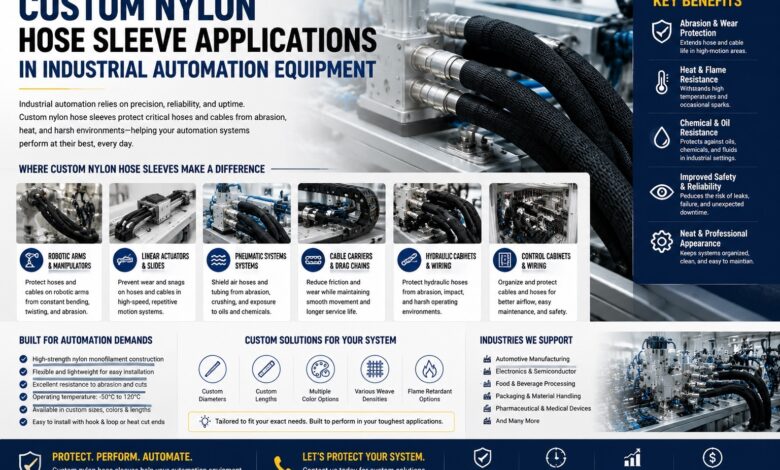
Industrial automation equipment depends on a dense network of hydraulic hoses, pneumatic tubes, electrical cables, sensor wires, and communication lines. These components may bend, vibrate, slide, and travel through repetitive motion cycles for many hours each day. Even when the machinery is designed carefully, exposed hoses can still rub against metal frames, guides, guards, neighboring lines, or moving assemblies. Custom nylon hose sleeves add a flexible protective layer that helps keep these critical components organized and better prepared for demanding industrial conditions.
Automated systems often operate with impressive speed and precision, but that performance places constant stress on flexible connections. A robotic arm may repeat the same movement thousands of times during a shift, while a packaging machine may open, close, rotate, and transfer products without stopping. Small amounts of friction can gradually wear hose covers or wire insulation, especially where space is limited. By protecting these contact points, nylon sleeving supports cleaner equipment layouts, simpler maintenance, and more dependable operation.
Custom Nylon Hose Sleeve solutions from qxcablesleeve can be tailored to different hose diameters, bundle sizes, routing lengths, and automation layouts. This customized approach gives equipment designers greater control over how hoses and cables are protected without adding an unnecessarily rigid barrier. The sleeve can follow curves, accommodate controlled movement, and surround either a single hose or a carefully selected group of compatible lines.
Why Automated Equipment Needs Flexible Hose Protection
Automation equipment is rarely motionless. Motors turn, cylinders extend, actuators reposition parts, and robotic joints move through programmed paths. Every movement can influence nearby hoses and cables, even when those components are not directly connected to the moving part. Vibration can travel through the machine frame, pressure changes can make hoses pulse, and repeated bending can shift flexible lines toward surrounding surfaces.
A custom nylon sleeve helps create separation between a hose and the environment around it. Instead of allowing the hose cover to receive every scrape or impact, the sleeve becomes the outer contact layer. This is especially helpful in compact machines where complete clearance cannot always be maintained throughout the operating cycle.
The flexible construction of nylon sleeving is also well suited to automation because it does not force a hose into a straight or rigid path. Properly selected sleeving follows the intended route while allowing the protected line to move naturally. This makes it a practical option for machines that combine high cycle rates, confined spaces, and complex motion.
Robotic Arm and Manipulator Applications
Robotic arms are among the clearest examples of equipment that benefits from organized hose protection. A robotic assembly may contain pneumatic lines, hydraulic hoses, sensor cables, control wires, and tool connections running along several moving joints. These lines must remain flexible enough to follow the arm while staying clear of pinch points, sharp edges, and rotating components.
Custom nylon hose sleeves can group compatible lines into controlled bundles along the arm. Bundling reduces visual clutter and helps prevent individual hoses from spreading into unsafe or abrasive areas. It also makes the complete routing path easier to inspect because technicians can follow one organized assembly instead of tracing several loose lines.
At the wrist or tool end of the robot, hoses may experience particularly frequent bending. A correctly sized sleeve can protect the outer surfaces while preserving the movement required for positioning. The sleeve should not be used to force a tight bend, but it can help reduce surface friction as the bundle moves through repeated cycles.
Important robotic applications include:
- Pick-and-place systems
- Automated material handling
- Welding and fastening equipment
- Painting and coating systems
- Machine-loading robots
- Palletizing and packaging arms
- Inspection and testing manipulators
In each case, the sleeve supports a tidier and more service-friendly installation.
Pneumatic Cylinder and Valve Systems
Pneumatic automation relies on compressed air lines connecting valves, cylinders, regulators, manifolds, and control components. These lines are often lightweight and flexible, which makes them easy to route but also more likely to shift under vibration or sudden pressure changes. When several tubes travel together, loose routing can create tangles or repeated rubbing.
Nylon sleeving can surround a group of compatible pneumatic lines and help them follow a defined path. The bundle becomes easier to guide through the machine and less likely to spread across moving parts. In areas near cylinder pivots or sliding mechanisms, the sleeve can also reduce direct contact with brackets and structural edges.
Valve banks often contain many closely spaced connections. Organizing the outgoing lines with custom sleeves can simplify the appearance of the installation and make maintenance more efficient. Technicians can identify groups based on their destination and inspect the protected routes without separating every line.
Sleeving also helps reduce tapping and rattling when pneumatic tubes vibrate against metal panels. The system still requires proper supports and secure fittings, but the additional nylon layer softens incidental contact and contributes to a more refined machine environment.
Hydraulic Power and Motion-Control Equipment
Hydraulic automation equipment may operate under substantial pressure, making hose protection especially important. Pumps, valves, cylinders, and hydraulic motors can create pressure pulsation that causes hoses to move slightly during operation. In mobile or high-force automated machinery, the hoses may also experience shock, vibration, and repeated flexing.
A custom nylon sleeve adds an abrasion-resistant layer around the hydraulic hose. It can be placed over individual lines in high-contact areas or used to organize suitable hose groups. Around frames, brackets, and machine openings, the sleeve helps reduce direct rubbing against the hose cover.
Hydraulic hose sleeves may also provide limited secondary containment by helping restrain or redirect fluid from a small pinhole leak. However, sleeving must never replace correct hose selection, pressure ratings, routine inspection, or immediate replacement of a damaged line. Its primary role is external protection and organization.
Common hydraulic automation applications include lifting tables, forming equipment, clamping systems, automated presses, positioning platforms, and material-transfer machinery. In these systems, well-organized hose routes can improve access to fittings while helping technicians notice wear before it develops into a larger problem.
Cable Carriers and Repetitive Motion Systems
Cable carriers guide hoses and wires along a controlled path as machine sections move back and forth. They are frequently used in automated cutting equipment, gantries, linear positioning systems, transfer lines, and other machinery with repeated travel. Although the carrier manages the overall movement, components inside it can still rub against one another.
Nylon sleeving can protect selected hoses or cable groups within the moving system. It creates a smoother outer surface and reduces direct contact between adjacent components. This can be useful when different lines have slightly different movement characteristics or when a hose has a textured outer cover.
Correct sizing is essential. An oversized sleeve may bunch inside the carrier, while an excessively tight sleeve may restrict movement. The selected sleeve should fit the bundle comfortably and maintain flexibility throughout the full travel distance.
Designers should test the assembly through repeated cycles and inspect the bend areas carefully. The sleeve should remain stable without twisting, gathering, or interfering with the carrier. When integrated properly, it supports orderly routing and provides an additional wear layer in one of the most active areas of the machine.
Conveyor and Material-Handling Systems
Automated conveyors often include sensors, pneumatic stops, hydraulic lifts, diverters, gates, and positioning devices. These components require flexible lines that may run beneath frames, around rollers, through side channels, or near moving assemblies. Without protection, hoses can contact supports, collect debris, or become difficult to trace during maintenance.
Custom nylon sleeves help organize these routes into clean groups. A bundle serving one conveyor section can be kept separate from lines serving another area, making the system easier to understand. This organization is particularly helpful in long production lines where similar hoses travel through multiple stations.
The sleeve also shields lines from incidental contact during cleaning, product changes, and maintenance work. Tools, carts, moving containers, or loose materials can scrape exposed hoses, especially near the outer edges of equipment. A durable sleeve adds a practical first layer of defense.
For conveyors that change height, width, or direction, the sleeved bundle should be observed in every operating position. Adequate length and flexibility must be maintained so the hoses are not pulled or pinched. Good routing and custom-fit protection work together to create a cleaner material-handling system.
Packaging, Sorting, and Processing Machinery
High-speed packaging and sorting equipment relies on synchronized movements that happen in fractions of a second. Pneumatic actuators, sensors, servo-driven mechanisms, and control devices work together to form, fill, seal, label, inspect, or sort products. The machinery often contains many flexible connections packed into a limited area.
Nylon hose sleeves can help combine compatible lines into organized routes around the machine. Instead of having individual tubes and wires crossing open spaces, the sleeve gives them a defined structure. This reduces loose movement and makes it easier to keep the bundle away from belts, gears, cutters, and sealing mechanisms.
Processing machinery may also require frequent cleaning. Although the correct sleeve must be chosen for the actual environment, a protective covering can help keep dirt and debris away from the hose surface. It also creates a more unified assembly that is easier to inspect during routine maintenance.
The positive result is not limited to appearance. Clean hose routing can reduce troubleshooting time, improve access to service points, and help maintenance teams return lines to their correct positions after repairs. Organized protection supports the speed and consistency expected from modern processing equipment.
Machine Vision, Sensors, and Inspection Stations
Automated inspection systems depend on cameras, sensors, lighting units, measurement devices, and communication cables. These components are often mounted on adjustable brackets or moving stages, which means their wires may bend repeatedly. A damaged cable can interrupt data transmission and affect the accuracy of the entire inspection process.
Custom nylon sleeving can protect sensor cables and small pneumatic lines routed together through the station. The sleeve keeps related connections organized while reducing direct contact with machine frames or positioning hardware. It can also help prevent loose wires from entering the field of view or interfering with moving products.
For adjustable inspection heads, the sleeve should allow sufficient movement without pulling on connectors. A carefully planned service loop can be protected with flexible sleeving while remaining accessible for calibration or replacement. This produces an installation that looks clean and supports reliable operation.
The ability to specify the appropriate diameter is especially useful in inspection equipment because bundles may be small and space may be limited. A close, comfortable fit provides protection without adding unnecessary bulk around sensitive instruments.
Automated Welding and Fabrication Equipment
Automated welding and fabrication systems present challenging conditions for hoses and cables. Robotic movement, rough metal surfaces, vibration, sparks, and nearby heat can all affect flexible connections. Any protective sleeve used in these areas must be chosen with the actual temperature and exposure conditions in mind.
Nylon sleeving is valuable in areas where abrasion and organization are the main concerns and where operating temperatures remain within the sleeve’s suitable range. It can protect hoses routed along frames, around positioners, or between control components. The sleeve also helps keep several compatible lines together as the equipment moves.
A custom length can cover the exact section exposed to rubbing without obstructing fittings or service points. This targeted approach prevents excess material from gathering near joints or interfering with tools.
For higher-temperature zones, equipment designers must evaluate whether additional specialized protection is needed. Good engineering means matching the protective material to the environment rather than relying on one solution everywhere. Within suitable areas, nylon sleeves provide a flexible and positive way to improve hose organization and surface protection.
Benefits for Equipment Designers and Maintenance Teams
Custom nylon hose sleeves support both initial machine design and long-term maintenance. Designers gain a flexible method for controlling hose routes without adding bulky rigid guards. Assembly teams receive clearer bundle paths, and maintenance technicians can inspect organized groups more efficiently.
Key benefits include:
- Improved abrasion resistance: The sleeve receives surface wear before the hose cover.
- Cleaner hose organization: Compatible lines remain grouped along defined routes.
- Reduced hose-to-hose friction: Bundled components are less likely to rub unpredictably.
- Better visual inspection: Damage to the outer sleeve can reveal contact points early.
- Simpler maintenance: Organized paths are easier to trace and service.
- Flexible installation: Sleeves can follow bends and moving assemblies.
- Customized coverage: Diameter and length can match the actual equipment layout.
- Reduced contact noise: The sleeve softens tapping against hard surfaces.
These benefits work together. Improved organization reduces uncontrolled movement, controlled movement limits abrasion, and clearer routing supports faster inspections.
Selecting the Right Custom Sleeve
Choosing the correct sleeve begins with accurate measurements. Designers should measure the outside diameter of the individual hose or completed bundle. The sleeve must be large enough to install easily but close enough to avoid excessive sliding or bunching.
Length should be based on the full movement and contact zone. A hose may shift when a cylinder extends, a robot rotates, or a platform changes position. The sleeve should remain over the protected area throughout the complete operating cycle.
Other important considerations include:
- Expected abrasion level
- Available installation space
- Range and frequency of movement
- Hose bend-radius requirements
- Nearby heat sources
- Exposure to dirt, fluids, or debris
- Access to fittings and labels
- Suitable retention methods
qxcablesleeve can support custom sizing for automation projects where standard sleeve dimensions may not match the required hose bundle or routing distance. A well-fitted sleeve helps the protected assembly remain compact, flexible, and easy to inspect.
Installation and Inspection Practices
Before installing a sleeve, the equipment should be checked for sharp edges, damaged brackets, loose clamps, and restricted movement. Protective sleeving works best when the underlying route is already designed correctly. Sharp surfaces should be corrected rather than simply covered.
The sleeve should extend beyond the expected contact area while leaving fittings and inspection points accessible. Retention should hold it in place without crushing the hose or creating a concentrated pressure point. Fasteners should not be positioned directly at severe bend locations.
After installation, the machinery should be operated through its complete movement range. Technicians should check for stretching, twisting, bunching, pinching, and unexpected contact. The bundle must remain flexible and should not pull on connectors or fittings.
Routine inspections should focus on fraying, cuts, flattened sections, discoloration, and unusual polishing. These signs can reveal where movement or abrasion is more severe than expected. Replacing a worn sleeve and correcting the route can help protect the more valuable hose or cable underneath.
Conclusion
Custom nylon hose sleeves are highly useful across industrial automation equipment, from robotic arms and pneumatic systems to hydraulic machinery, conveyors, inspection stations, and repetitive-motion assemblies. They organize flexible lines, reduce surface abrasion, soften incidental contact, and create cleaner routes through complex machinery.
The best results come from selecting a sleeve according to the actual bundle diameter, movement range, exposure conditions, and installation space. Sleeving should complement good routing, proper supports, correct bend radii, and regular inspection. When all of these elements work together, automated equipment becomes easier to assemble, maintain, and monitor.
A carefully fitted nylon sleeve may be a simple component, but its contribution can be substantial. It protects the flexible connections that allow automation systems to move, sense, grip, lift, transfer, and control. By adding organized protection at the design stage, equipment teams can support dependable operation and a more professional finished machine.
Explore suitable automation hose protection options at https://qxcablesleeve.com/products/nylon-hose-sleeve/.