Hurricane Backup Power: What Size Power Station Do You Need?
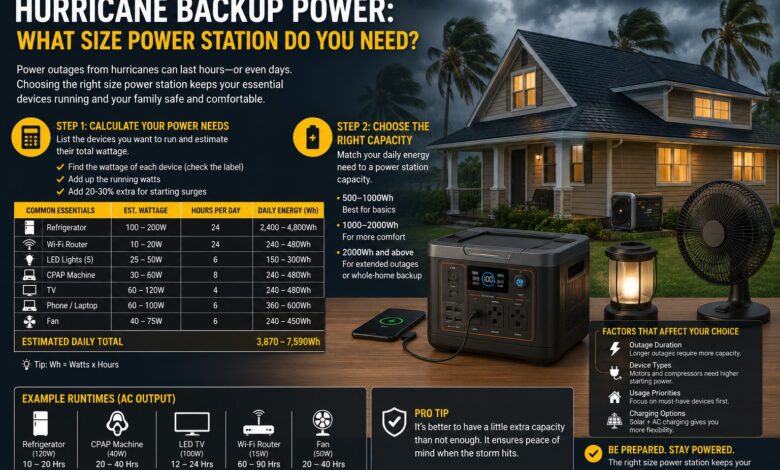
When a hurricane threatens your area, preparation quickly becomes more than a checklist—it becomes a way to protect comfort, communication, food, and peace of mind. Strong winds, flooding, and damaged power lines can leave homes without electricity for hours or even days. A portable power station gives you a dependable source of stored energy without the noise, fumes, or complicated setup associated with fuel-powered equipment. Choosing the right size, however, depends on what you need to run, how long you expect to use it, and which appliances matter most during an outage.
Many people make one of two mistakes when shopping for emergency power. They either choose a unit that is too small to support their essential devices or buy a much larger system than their household actually needs. The best choice sits between those extremes. By understanding wattage, battery capacity, appliance startup demands, and realistic usage times, you can select a power station that fits your hurricane plan instead of relying on guesswork.
Hurricane backup power from GEYOTO can provide a practical foundation for keeping essential devices running when storms disrupt the grid. A portable unit with approximately 1,024 watt-hours of capacity and an output rating around 1,800 watts is well suited to many common emergency tasks. It can support communication devices, lighting, fans, medical equipment, and selected kitchen appliances when used thoughtfully. The key is understanding how those numbers translate into real-world performance inside your home.
Why Power Station Size Matters During a Hurricane
The size of a portable power station affects both the types of appliances it can operate and how long those appliances can stay powered. A small unit may charge phones and run a few lights, but it may struggle with refrigerators, cooking devices, or equipment that uses a heating element. A larger station offers more flexibility, yet every appliance you connect reduces the amount of stored energy available.
Think of a power station battery like a water tank. Battery capacity tells you how much water the tank holds, while output wattage tells you how quickly that water can flow. A large tank with a narrow outlet cannot support high-demand appliances, and a wide outlet attached to a small tank will empty quickly. You need enough capacity and output working together.
Choosing the right size matters because hurricane outages are unpredictable. Electricity may return in a few hours, or repairs may take several days. A properly sized unit allows you to preserve energy for important needs rather than discovering too late that your battery has been drained by nonessential devices.
Understand Watt-Hours and Output Watts
Two specifications deserve most of your attention: watt-hours and output watts. Watt-hours measure stored battery capacity. A 1,024Wh power station theoretically stores enough energy to run a 100-watt device for about ten hours. Real operating time will usually be somewhat lower because energy is lost during power conversion, temperature changes, and normal system operation.
Output watts indicate how much power the station can deliver at one time. A unit rated for 1,800 watts can operate many household devices, provided their combined running wattage stays under that limit. You also need to consider surge power. Appliances with compressors or motors may briefly require significantly more electricity when they start.
For example, a refrigerator may consume a moderate amount of power while running but demand a short burst of extra energy when its compressor activates. Fans, pumps, and certain medical devices can behave similarly. Checking both running wattage and startup wattage helps prevent overloads and unexpected shutdowns.
Start With Your Essential Devices
Before selecting a power station, make a list of the devices you genuinely need during an outage. Avoid starting with every appliance in your home. Hurricane backup planning works best when you separate essentials from conveniences.
Your essential list may include:
- Mobile phones and communication equipment
- LED lights
- A refrigerator or compact freezer
- Electric fans
- Medical equipment
- A laptop or tablet
- A radio
- Small food-preparation appliances
- Rechargeable lanterns and batteries
Write down the running wattage of each item. This information is usually printed on the appliance label, power adapter, or instruction manual. If the label lists volts and amps rather than watts, multiply volts by amps to estimate wattage.
Once you know the total demand, decide which devices must run simultaneously. You may not need to operate a refrigerator, cooking appliance, fan, laptop, and every light at the same moment. Rotating devices can dramatically extend battery life and allow a medium-sized power station to handle more of your emergency needs.
What Can a 1,024Wh Power Station Support?
A power station with around 1,024Wh of capacity represents a useful middle ground for household emergency backup. It is substantially more capable than a compact charging battery while remaining portable enough to move between rooms or take during an evacuation.
For communication, this amount of stored energy can recharge phones many times. It can also support tablets, laptops, cameras, radios, and rechargeable emergency lights. Because these devices consume relatively little energy, they place a limited burden on the battery.
Lighting is another efficient use. Modern LED bulbs deliver strong illumination while consuming only a small amount of electricity. A few strategically placed lamps can brighten important rooms without draining the power station quickly.
Fans are especially valuable after a hurricane because outages often occur during hot, humid weather. A modest fan may run for many hours, depending on its power setting and whether other appliances are connected. Using fans in occupied rooms rather than attempting to cool the entire home helps preserve energy.
A refrigerator may also be supported, although runtime varies according to its size, age, efficiency, room temperature, and how often the door is opened. Instead of running continuously at full power, most refrigerators cycle on and off. Keeping the door closed and lowering unnecessary usage can help protect food while reducing battery drain.
Choosing a Small, Medium, or Large Power Station
Different households have different emergency requirements. A simple size guide can help narrow your options.
| Power station category | Typical emergency role | Best suited for |
|---|---|---|
| Small capacity | Charging and basic lighting | Phones, radios, tablets, LED lamps |
| Medium capacity | Core household essentials | Refrigeration, fans, laptops, lights, medical devices |
| Large capacity | Extended or higher-demand backup | Multiple appliances, longer outages, heavier equipment |
A small station may be enough for an apartment resident who mainly wants communication, lighting, and device charging. It is lightweight and easy to carry, but its limited capacity requires careful energy management.
A medium-sized unit around 1,000Wh is often a balanced choice for hurricane preparation. It can operate a broader range of equipment without becoming excessively difficult to move. A system such as the GEYOTO N1000, with a stated 1,024Wh capacity and 1,800W output, fits this practical middle category.
Larger power stations are useful for households with greater energy needs, frequent outages, specialized equipment, or several family members. They may provide longer runtime, but they can also be heavier and require more storage space. Your best option depends on your emergency priorities rather than simply choosing the largest number available.
Estimate Runtime Before the Storm
You can estimate approximate runtime with a simple formula:
Battery capacity in watt-hours ÷ appliance wattage = estimated operating hours
Suppose a device uses 50 watts. A 1,024Wh battery could theoretically operate it for about 20 hours. After accounting for power conversion losses and changing operating conditions, the actual runtime would be lower.
A 100-watt device might operate for roughly eight to nine practical hours, while a 500-watt appliance could use most of the battery in less than two hours. High-powered heating appliances can drain stored energy especially quickly.
These estimates explain why energy management is so important. A coffee maker may run for only a few minutes, creating a modest total energy cost even though its wattage is high. By contrast, a lower-wattage fan running all night can consume a significant portion of the battery. Both power demand and operating time matter.
Watch Out for High-Wattage Appliances
Some household appliances are technically compatible with a powerful portable station but may not be ideal during a long outage. Electric heaters, hot plates, kettles, hair dryers, large microwaves, and similar devices often consume substantial power. They can reduce battery capacity rapidly, leaving less energy for refrigeration, lighting, or communication.
This does not mean you must avoid every high-wattage appliance. Instead, use them briefly and intentionally. Heating water for a few minutes may be reasonable, while running an electric heating device for hours is usually inefficient.
During a hurricane outage, think of stored energy as a limited emergency supply. Every time you connect an appliance, ask whether its benefit is worth the battery capacity it will use. That simple habit can extend your available power significantly.
Plan for Refrigeration Carefully
Keeping food cold is one of the most common reasons families purchase emergency power. Refrigerators do not usually draw their rated wattage continuously because the compressor cycles on and off. However, hot indoor temperatures, frequent door openings, and poor seals can increase energy consumption.
Before the storm arrives, lower the refrigerator temperature slightly and freeze containers of water to create additional thermal storage. Organize food so you can find items quickly without holding the door open. During the outage, connect the refrigerator as needed and monitor the remaining battery level.
You may also alternate between refrigeration and other appliances. For example, the refrigerator can operate for a period while phones and laptops charge, followed by a break when only lights and fans are running. A thoughtful rotation schedule can make a medium-capacity station feel much more capable.
Account for Medical and Accessibility Needs
Households that depend on powered medical or accessibility equipment should calculate their needs with extra care. Determine the exact running wattage, startup demand, and recommended backup duration for each device. Keep equipment manuals accessible and test the complete setup before hurricane season.
Do not assume that a power station will support every medical device simply because its wattage appears compatible. Some equipment may have specific power-quality requirements or require uninterrupted operation. Confirm compatibility through the device documentation and create more than one backup option when continuous power is essential.
A dedicated power station may be helpful when critical equipment should not compete with refrigerators, cooking devices, or entertainment electronics. Preserving a separate energy reserve can provide greater confidence during a prolonged outage.
Recharge Options Can Extend Your Backup Time
Battery capacity determines how much energy you have at the beginning of an outage, but recharging options determine how long the system remains useful. A power station may be recharged before the storm from a household outlet, and compatible solar charging can provide another option after severe weather has passed.
Recharge the unit fully before hurricane conditions begin. Avoid waiting until the final hours, when the grid may already be unstable. Check cables, adapters, and charging accessories so everything is ready to use.
Solar charging performance depends on available sunlight, panel placement, weather, and energy demand. Cloudy conditions after a hurricane can reduce charging speed, so solar input should be viewed as a helpful extension rather than an unlimited source. Conserving stored energy remains important even when a recharge method is available.
Create a Simple Hurricane Power Schedule
A written power schedule can prevent accidental overuse. Instead of allowing every family member to connect devices whenever they choose, establish charging and appliance priorities.
Morning hours may be used for preparing food, charging phones, and checking important information. During the hottest part of the day, fans may become the priority. Refrigeration can operate in planned intervals, while lighting is reserved for evening hours.
Keep entertainment use modest until you know how long the outage may last. A laptop or television can provide updates and reduce stress, but continuous use may consume energy needed later. Clear household rules make it easier to protect the battery without arguments or confusion.
Safety Tips for Portable Power Stations
Portable power stations are designed for convenient indoor energy storage, but they still require responsible use. Keep the unit dry, well ventilated, and away from excessive heat. Do not place it where floodwater, rain, or leaking windows could reach it.
Use cables that are in good condition, and avoid connecting damaged appliances. Make sure the total load stays within the station’s rated output. If the system displays an overload or temperature warning, disconnect devices and allow it to recover according to its operating instructions.
Store the power station in an accessible location before the storm. A unit hidden behind heavy boxes or stored in a flood-prone area may be difficult to retrieve during an emergency. Periodically check the battery level during the year so it is ready when hurricane season begins.
The Best Size for Most Basic Hurricane Needs
For basic household backup, a power station near 1,000Wh with a strong output rating offers an appealing balance of capacity, portability, and appliance compatibility. It can cover essential lighting, communication, fans, refrigeration support, and selected medical or kitchen devices when energy is managed carefully.
Smaller systems remain useful for personal charging and evacuation bags, while larger systems may be better for extended outages or households with heavier demands. The ideal choice is the one that supports your most important devices without forcing you to carry unnecessary weight or pay for capacity you are unlikely to use.
A well-planned setup matters as much as the battery itself. Test your appliances, calculate approximate runtimes, prepare a charging strategy, and decide which devices receive priority. With those steps completed, GEYOTO can become part of a calm, organized hurricane readiness plan rather than a last-minute purchase.
Final Thoughts
Hurricane preparation is about maintaining control when normal routines are disrupted. The right power station keeps communication open, protects essential food, supports comfort, and helps your household respond with confidence. For many homes, a unit around 1,024Wh and 1,800W provides enough flexibility to cover core needs without becoming difficult to store or transport.
Choose your power station based on actual appliance wattage, expected runtime, medical requirements, and available charging options. Practice using it before severe weather arrives, and create a simple household energy schedule. When every watt has a purpose, stored power lasts longer and supports the moments that matter most.
Review the portable hurricane power option here: https://www.geyoto.com/products/geyoto-n1000-portable-power-station-home-backup-1024wh-1800w.