Grease Fire Mitigation: Compliance and Engineering of a Commercial Kitchen Suppression System
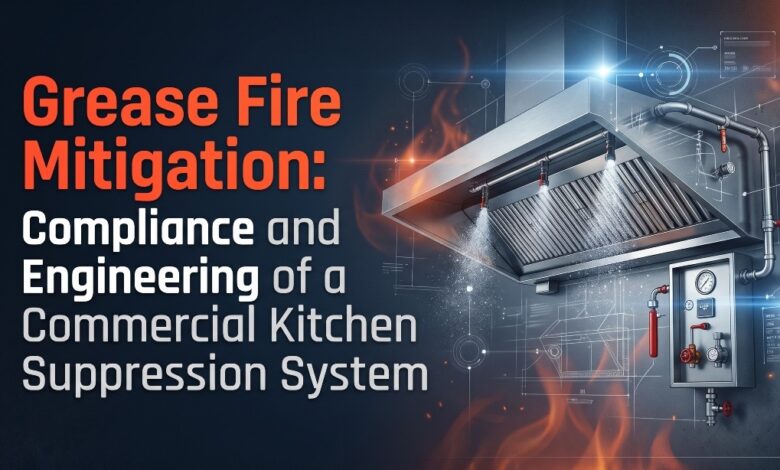
Commercial kitchen operations run in high-heat environments where open flames, red-hot griddles, and high-temperature cooking oils constantly interact. Cooking oil and vegetable fats possess high thermal storage capacities, meaning once an ignition threshold is crossed, the resulting grease fire burns with fierce intensity and resists simple smothering techniques. Designing an effective grease fire mitigation strategy requires a complete engineering approach that integrates heavy-duty hood ventilation, thermal detection linkages, automatic fuel-shutoff interlocks, and specialized chemical suppression distribution networks.
Modern commercial suppression assemblies operate as closed, highly calibrated safety barriers designed to detect, contain, and extinguish sudden flash fires within seconds of ignition. By isolating grease vapor extraction paths and blanketing active cooking vessels with wet chemical agents, these systems prevent catastrophic building damage, business disruption, and structural failure. Engineers and restaurant operators must evaluate every thermal hazard zone across the culinary line to specify systems that fulfill strict mechanical and life-safety codes.
Understanding the interaction between hood aerodynamics, chemical agent coverage, and automated fuel valves ensures optimal commercial cooking safety. Facility managers and mechanical contractors seeking specialized equipment specifications and compliance guidance can explore detailed resources at https://chieffire-safety.com/.
The Chemistry of Commercial Grease Fires and Extinguishment
Extinguishing a grease fire requires addressing the unique combustion behavior of liquid cooking fats. Standard water delivery can cause explosive flare-ups due to steam expansion, making targeted chemical extinguishment essential:
- Saponification Mechanism: When specialized wet chemical extinguishing agents (typically potassium acetate, potassium carbonate, or potassium citrate formulations) hit boiling cooking fat, they react directly with the fatty acids. This alkaline chemical reaction, known as saponification, converts the surface oil into a thick, soapy foam blanket.
- Thermal Blanket Isolation: The thick foam barrier physically separates atmospheric oxygen from the hot fuel surface, cutting off the combustion triangle almost instantaneously.
- Rapid Evaporative Cooling: The water base within the discharged chemical mist evaporates, absorbing latent heat and pulling the liquid fat temperature below its auto-ignition point to prevent re-flash.
- Aerosol Mist Delivery: Engineered discharge nozzles atomize the liquid into a fine fog pattern, settling gently over deep fryer vats without splashing liquid fuel over cooking perimeters.
Core Engineering Assemblies of Kitchen Suppression Systems
A robust commercial kitchen suppression network comprises discrete mechanical and pneumatic sub-assemblies working in tandem across the entire cooking zone:
- Pressurized Agent Storage Cylinders: Dedicated heavy-gauge steel tanks hold the liquid wet chemical charge, pressurized continuously with dry nitrogen to deliver immediate propellant power during activation.
- Thermal Link Detection Lines: A stainless steel cable runs inside the ventilation hood canopy, tensioned through corner pulleys and fitted with series-connected fusible alloy links situated directly above peak heat generators.
- Mechanical Release Mechanisms: A spring-loaded control head monitors cable tension. When excessive heat melts a fusible link, the sudden loss of cable tension drops a puncture pin into a nitrogen cartridge, driving chemical distribution through the pipe network.
- Appliance and Plenum Distribution Piping: Schedule 40 black iron, chrome-plated, or stainless steel pipes distribute pressurized agent uniformly across deep fat fryers, ranges, charbroilers, upright salamanders, hood extraction plenums, and exhaust duct collars.
- Specialized Discharge Nozzles: Each cooking hazard type uses purpose-engineered nozzles with distinct spray angles, flow rates, and internal swivel adapters to ensure exact hydraulic distribution.
Fuel Shutoff Interlocks and Mechanical Integration
Suppressing open flames while heating elements continue supplying energy is ineffective. Commercial fire protection regulations enforce strict automated interlock requirements across all utility connections:
- Mechanical Gas Shutoff Valves: Spring-loaded or pneumatic gas valves plumbed into the main incoming gas train close instantly when triggered by mechanical control heads, cutting off gas supplies to all appliances beneath the hood.
- Electrical Shunt-Trip Circuit Breakers: Electric griddles, fryers, and induction ranges must connect through shunt-trip breakers that drop electrical power the second suppression activates, eliminating sustained ignition temperatures.
- Make-Up Air Shutdown Controls: Fresh make-up air fans blowing directly into the hood cavity must shut down immediately upon discharge to prevent incoming drafts from diluting the chemical blanket.
- Exhaust Fan Continuity: Building codes typically require kitchen exhaust fans to remain powered on during a discharge event, ensuring hot combustion gases and aerosolized grease continue exiting the structure safely.
Regulatory Standards and Compliance Frameworks
Compliance in commercial kitchen design involves meeting rigorous regional and international safety codes:
- NFPA 96 Standards: The standard for ventilation control and fire protection of commercial cooking operations outlines minimum clearances to combustibles, structural duct construction requirements, and inspection frequencies.
- NFPA 17A Wet Chemical Systems: Outlines strict engineering parameters for pre-engineered wet chemical fire extinguishing systems, including pipe sizing limits, nozzle heights, and minimum agent quantities per appliance.
- UL 300 Fire Testing Protocol: Enforces full-scale real-world testing of fire extinguishing systems against modern commercial cooking equipment, which burns higher-temperature vegetable fats instead of traditional animal lards.
- Routine Semiannual Certifications: Fire codes mandate certified technician inspections every six months to replace fusible links, verify mechanical cable travel, clean nozzle blow-off caps, and weigh agent tanks.
Proactive Maintenance, Cleaning, and Operational Integrity
Even the most advanced suppression engineering depends on diligent grease containment and routine mechanical maintenance protocols:
- Daily Grease Filter Cleaning: Baffle grease filters capture airborne droplets before they enter ductwork; soaking and degreasing these metal baffles prevents surface grease buildup along the hood apron.
- Scheduled Duct and Hood Degreasing: Certified exhaust cleaning specialists must scrape and steam-clean entire duct runs down to bare metal to eliminate volatile fuel loads inside vertical shafts.
- Nozzle Aim and Position Verification: Kitchen equipment must never be shifted or rearranged beneath hoods without recalibrating discharge nozzle aim to preserve exact hydraulic spray coverage.
- Protective Blow-Off Caps: Silicone or rubber blow-off caps over nozzle tips prevent vaporized grease and dust from clotting orifices; these caps must remain supple and properly seated during routine operations.
- Clear Manual Pull Station Access: Wall-mounted manual release pull stations positioned along exit pathways must remain completely unobstructed by storage crates, carts, or prep tables.
Engineering a dedicated commercial kitchen suppression system around certified equipment, precise nozzle hydraulics, and automated utility shutoffs provides dependable protection against catastrophic grease fires. Facility managers, MEP engineers, and commercial developers seeking high-performance fire protection valves, safety systems, and commercial hardware can rely on the technical expertise and certified products available at https://chieffire-safety.com/.